
electrochemist
 1
7.7

- noun
- /ɪˌlɛk.trəʊˈkɛm.ɪst/
- Specialized
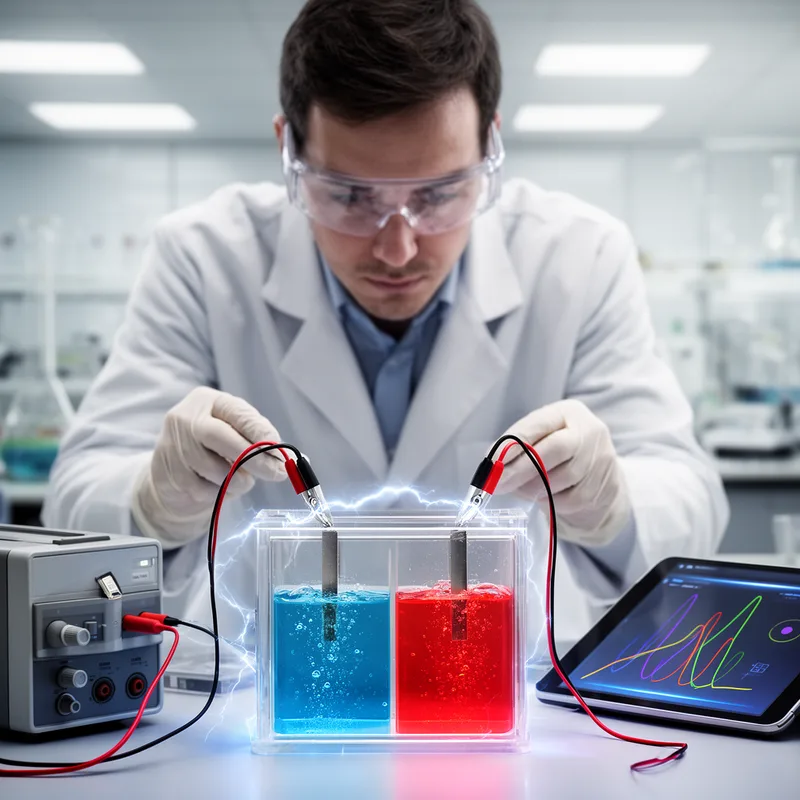
- An electrochemist studies the effects of electric currents on chemical compounds in a laboratory setting.
Examples
-
And I'm really glad that along came Johnstone Stoney, who was an electrochemist, right, the noblest form of chemistry.
-
The electrochemist community tried, and couldn't.
Blog text (27) -
There is an electrochemist working at Oxford.
-
Dr. Michael McKubre, an electrochemist at SRI International, has been engaging in cold fusion research for over 20 years.
Blog text (14) -
Two well-respected but astonishingly unlucky electrochemists had gone public with a discovery that became known as "cold fusion."
Blog text (27) -
Shortly after the discovery, Urey and Edward Washburn, an electrochemist at NBS, found that deuterium could be isolated relatively easily by electrolysis of ordinary water.
Academic text (2012) -
One of the criticisms that Nathan Lewis had used with telling effect is that local hot spots often develop in electrolysis experiments (Lewis is himself an electrochemist and a consummate experimentalist).
Academic text (1994) -
When Pons and Fleischmann, two of the world's leading electrochemists at the time, reported in 1989 that their tabletop experimental apparatus had produced anomalous heat that could only be explained by some sort of nuclear process, the race to define or explain cold fusion began.
Blog text (11) -
Dr. Jane Smith is an experienced electrochemist who researches how electricity interacts with chemical reactions.
-
The university invited a renowned electrochemist to give a lecture on advances in battery technology.
Surface Forms
Morphology
electrochemist = chemist (semi-transparent) = electro + chem + ist
The word is built transparently from 'chemist' with the combining form 'electro-', but the specific profession is a specialized field label rather than an everyday composition.
Etymology
The word electrochemist joins electro- meaning 'electricity' and chemist, a person who studies chemicals. The electro- part comes from a Greek word for 'amber', because people saw that rubbing amber made small sparks of 'electricity', so an electrochemist studies how electricity and chemicals work together.