
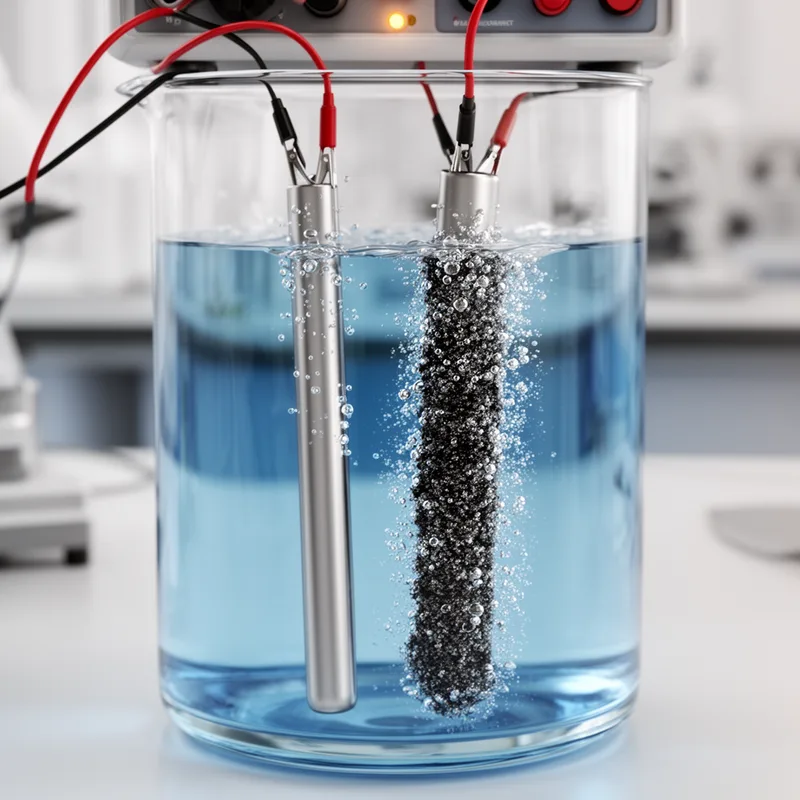
electrocatalytic


 1
9.2
- adjective
- /ɪˌlɛktrəʊˈkætəˌlɪtɪk/
- Specialized
- Understanding electrocatalytic mechanisms is essential for advancing technologies that harness electricity for chemical synthesis.
Examples
-
(This principle is already applied in a proprietary, patented electrocatalytic desalinisation process called "Aquajell.")
Blog text (29) -
The new catalyst performs nearly as well as platinum, achieving electrocatalytic activity and stability unmatched by any other non-noble metal compounds.
Blog text (9) -
Oxygen is monitored by a sensor that uses well-known electrocatalytic zirconium oxide sensor technology.
Academic text (1996) -
The researchers are studying the electrocatalytic process that could improve fuel cell efficiency.
-
Innovative electrocatalytic systems are being developed to enhance chemical conversions in renewable energy applications.
Surface Forms
Morphology
electrocatalytic = catalytic (semi-transparent) = electro + catalyt + ic
The structure is clear, but the word belongs to a specialized scientific register, so many learners may not infer the exact sense from the parts alone.
Etymology
Electrocatalytic comes from electro- meaning 'electricity' and catalyst meaning 'something that makes a chemical reaction faster'. So it describes a process where electricity and a catalyst work together to speed up a reaction.