
eldership


 1
9.3
1
9.3
- noun
- /ˈɛldərˌʃɪp/
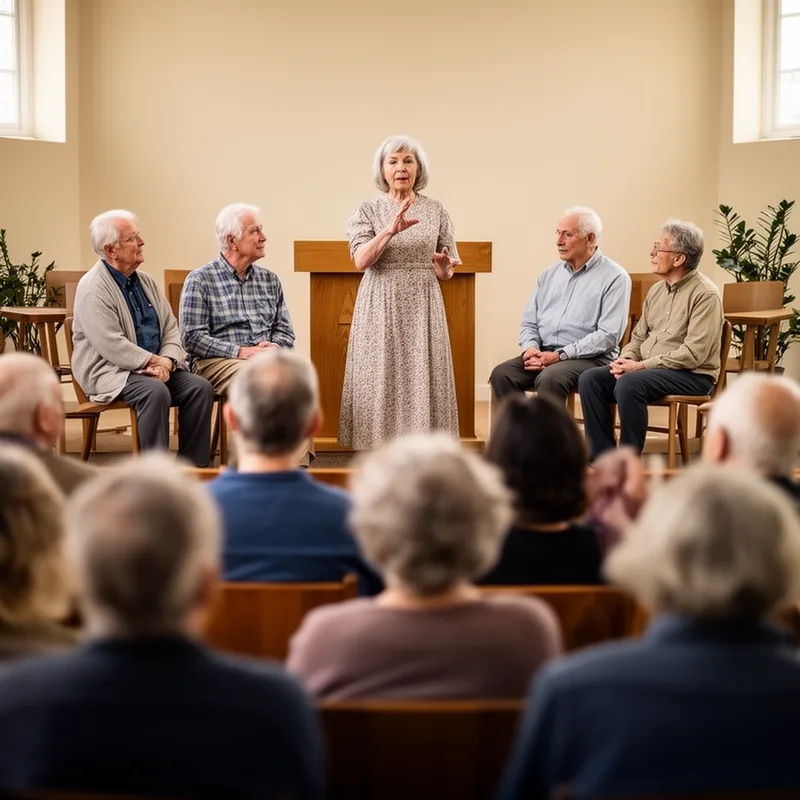
- To be sure, the authority of Elders has to do with the acquisition over time of both cultural knowledge and judgment, tempered by years of experience, but eldership in the sense Ojibwe people tend to speak of it is less a function of biological age than it is a function of community recognition.
Examples
-
Her appointment to the eldership of the church was celebrated by the congregation as a recognition of her dedication and service.
-
A small group of survivors formed the eldership.
-
In doing so, many elderships have decided to have both Sunday morning and Wednesday night Bible classes.
Blog text (22) -
As an elder that can intervene to change the future, it interacts with the elder dimension of the Potto mask's actions and goes on to fully develop the mystically powerful meaning of eldership.
Academic text (1998) -
Likewise, Isaac inherently understood the authority and respect afforded to eldership in his Ethiopian tradition, and he knew how to tap into that resource by creating highly successful networks of interreligious elder mediators.
Academic text (2007) -
The committee of elders met to discuss important community matters, highlighting the significance of eldership in their decision-making.
-
In some cultures, eldership is associated with wisdom and experience, guiding younger generations through challenges.
Synonyms

A stage of life when a person is older and respected for their wisdom
How Authoritative

Surface Forms
Morphology
Etymology
The word eldership comes from elder, an old English word for a respected 'older' person, and the ending -ship, as in friendship, which means a 'state' or 'position'. So, eldership is the 'position' or office of being an elder, often in a church or community.