
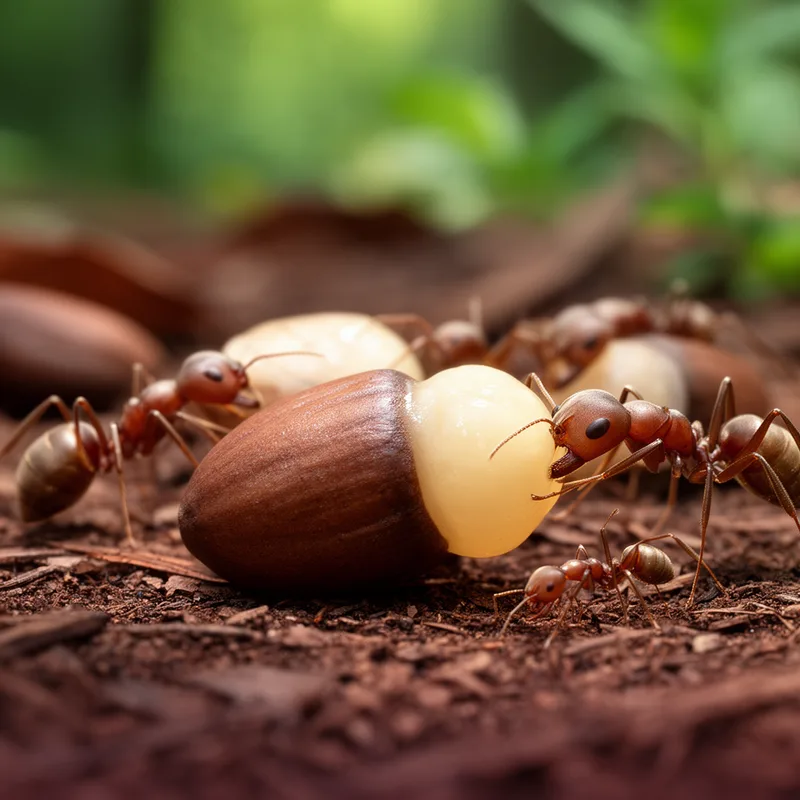
elaiosome


 1
9.9
- noun
- /ɪˈleɪəˌsoʊm/
- Specialized
- Once in the nest, the ants feed the elaiosomes to their ravenous larvae and throw the otherwise intact seeds into their garbage.
- ants carry elaiosome
- elaiosome-bearing seeds
Examples
-
Many woodland plants rely on their elaiosome to encourage ants to disperse their seeds.
-
Many plants produce elaiosomes to attract ants.
-
The elaiosome on the seed attracts ants, which carry it back to their nest.
-
Researchers studied how the size of the elaiosome affects the distance seeds are moved by ants.
-
An elaiosome attracts ants.
-
The ants seize the seeds with their mandibles, almost always by the elaiosomes, and carry them to their nest.
-
The ant's mandibles grasp a white structure that is part of the seed—an oily and edible appendage known as an elaiosome.
Surface Forms
Etymology
Elaiosome comes from Greek parts elaio- 'oil' and -soma 'body', so it originally meant 'oil body'. So an elaiosome is the small, oily or fleshy part on a seed that attracts ants and helps the plant spread its seeds.