
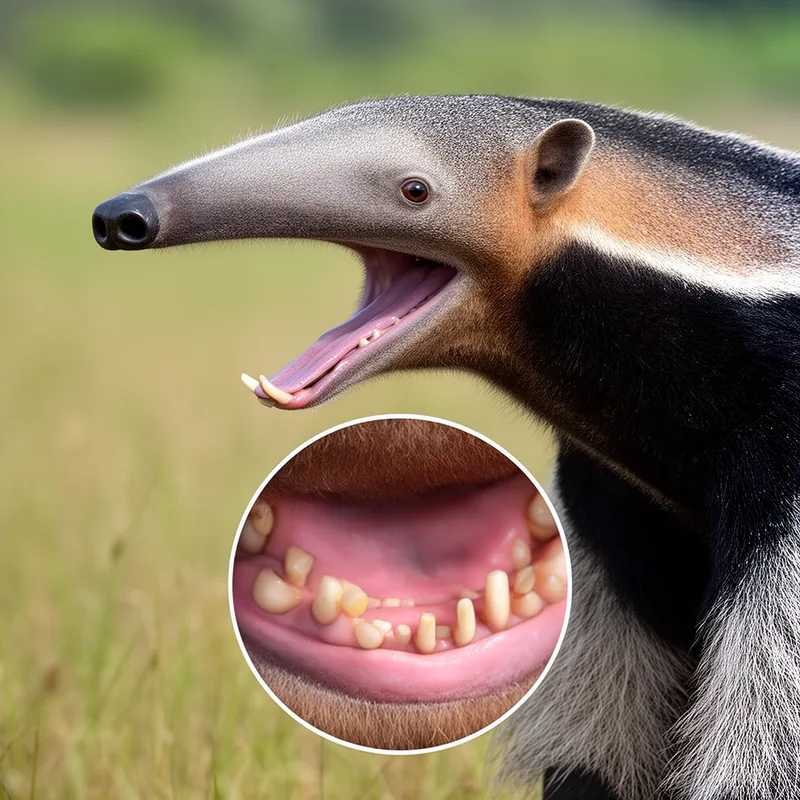
edentate
- noun
- /ˈiːdənˌteɪt/
- Archaic
- Some native South American groups, such as caviomorph rodents, New World primates, and several lineages of marsupials and edentates, persisted.
Examples
-
Edentates reached their apex of anatomical and species diversity during this time.
Academic text (2009) -
Rounding out the plant eaters, some edentates and marsupials evolved herbivorous forms.
Academic text (2009) -
These are cousins of the armadillo; they’re both edentates, but anteaters are much bigger, and they have really long hollow noses.
Fiction book (1995) -
An edentate, like the sloth, relies on its limited teeth to eat soft leaves in the rainforest.
-
Edentates such as anteaters have long tongues that help them reach insects in hard-to-access locations.
-
Many people are fascinated by edentates because they exhibit unique traits not found in other mammals.
Surface Forms
Etymology
An edentate is an animal with few or no teeth. The name comes from Latin parts e- 'without' and dent 'tooth', and it was used for creatures like anteaters, armadillos, and sloths from Central and South America.

