
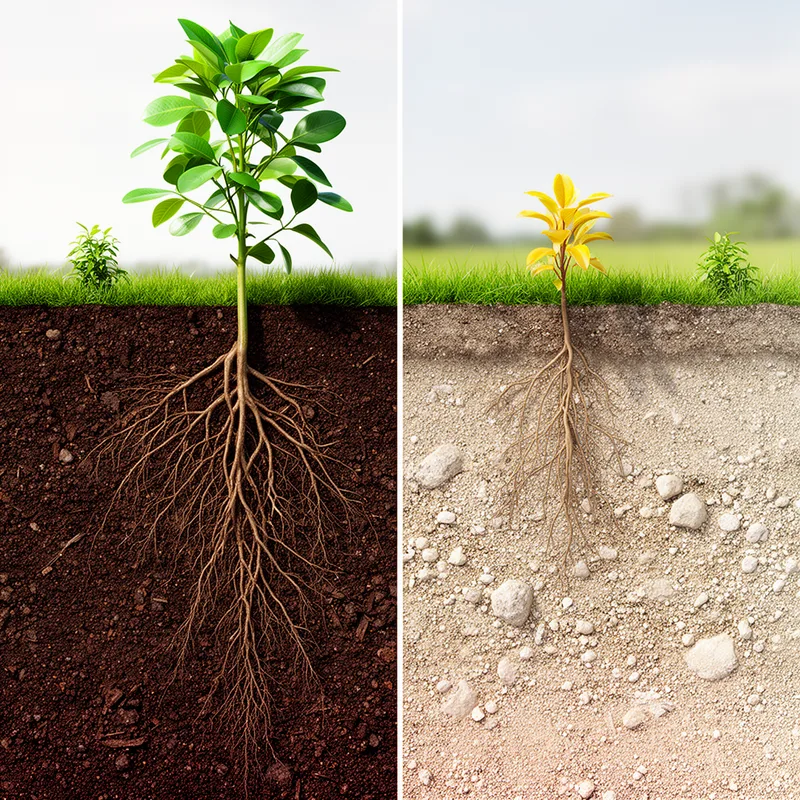
edaphic
- adjective
- /ɪˈdæfɪk/
- Specialized
- The scientist studied how edaphic factors affect the growth of various plant species.
Examples
-
The bioclimatic and edaphic (soil-related) setting strongly controls the environmental consequences of land use.
Academic text (2006) -
Given the dry climatic and edaphic conditions during the cropping season, irrigation is frequently necessary.
Academic text (2002) -
In some areas, edaphic factors are important.
Blog text (2) -
For example, rainforest ecoregions in Amazonia often contain small edaphic savannas.
Academic text (2001) -
Coastal and interior areas of eastern Australia proved to have climatic and edaphic characteristics very well suited to several species of prickly pear.
Academic text (1992) -
Without fire, state shifts proceed slowly because of edaphic controls (infertility; drought) on the mesophication process, with some states partially maintained even in the absence of fire (shaded balls).
Academic text (2008) -
Farmers in the region must consider the edaphic conditions to ensure successful crop yields.
-
Different plants thrive in specific edaphic environments, which determine their growth patterns.
Synonyms
The study of soil, plants, and tiny living things in farming

Relating to the study of soil for growing crops

About the soil and how it helps crops grow
Surface Forms
Morphology
edaphic = edaph + ic
The root 'edaph-' is a Greek combining form (not a standalone English word), so learners who know common English bases cannot reliably infer the meaning from its parts.
Etymology
Edaphic comes from the Greek root edaph-, meaning 'ground' or 'floor', so imagine the soil right under your feet. That's why edaphic describes the soil itself and how that soil affects plants and other living things.

