
ectodermal


 1
9.9
- adjective
- /ˌɛktoʊˈdɜrməl/
- Specialized
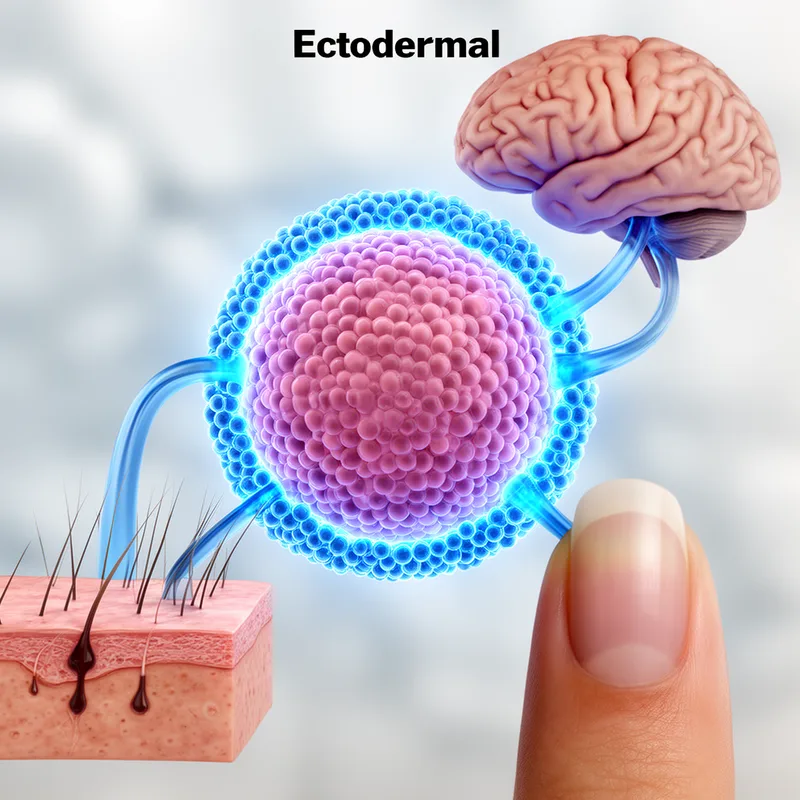
- Ectodermal cells develop into the skin and hair follicles during the embryonic stage.
Examples
-
The neurofibromatoses are autosomal dominant diseases that have widespread effects on ectodermal and mesodermal tissue.
Academic text (2007) -
Congenital epidermoids are believed to arise as a result of cellular dysfunction during embryogenesis, which leads to an abnormal migration of ectodermal cells.
Academic text (2006) -
We, you can say it's ectodermal tissue because it arises from the embryonic ectoderm, OK.
-
Grid-mapping ectodermal contours.
-
They arise as a result of an incomplete closure of the ectodermal portion of the first branchial cleft.
Academic text (2009) -
Two ectodermal thickenings (the nasal placodes) arise on each side of the dependent part of the frontonasal process.
Academic text (2005) -
According to these criteria, a type 2 anomaly was described as a defect of ectodermal and mesodermal origin located within the substance of the parotid gland.
Academic text (1998) -
The ectodermal layer is crucial for forming the nervous system in early development.
-
During embryogenesis, ectodermal structures give rise to sensory organs such as the eyes and ears.
Synonyms
Relating to the outer layer of cells in an embryo that makes skin and nerves
Surface Forms
Morphology
ectodermal = ectoderm (semi-transparent) = ecto + derm + al
The adjective is formed regularly from the noun 'ectoderm' by adding '-al'.
Etymology
Ectodermal comes from the parts ecto- meaning 'outer' and derm meaning 'skin', as you can see in the word dermatology. So, ectodermal describes things that come from the embryo's outer layer, like skin, hair, and nails.