

echoencephalograph
- noun
- /ˌɛkoʊˌɛnˈsɛfəloʊˌgræf/
- Specialized
- The echoencephalograph revealed a small lesion in the patient's frontal lobe.
Examples
-
Doctors used an echoencephalograph to examine head trauma after the accident.
-
The echoencephalograph provides detailed images of the brain.
-
Advancements in technology have made the echoencephalograph more accurate for brain diagnostics.
-
Doctors use an echoencephalograph to diagnose brain conditions.
-
Doctors used an echoencephalograph to examine head trauma after the accident.
-
The echoencephalograph revealed a small lesion in the patient's frontal lobe.
-
Advancements in technology have made the echoencephalograph more accurate for brain diagnostics.
Synonyms
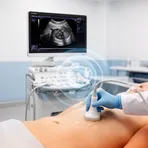
A machine that makes images inside the body using sound waves

A machine that makes pictures of the inside of the body using sound waves
How Advanced
- Specialized

- Specialized
Surface Forms
Morphology
echoencephalograph = echo + encephalo + graph
Although the word is built from recognizable classical combining forms, its technical medical meaning is not readily recoverable for an average B1 learner from those parts alone.
Etymology
Echoencephalograph comes from parts that mean 'sound', 'brain', and 'record': echo- 'sound', encephalo- 'brain', and -graph 'record'. Think of it like a photograph made with sound — the machine uses sound waves to create pictures of the brain, so doctors can see and find problems.

