
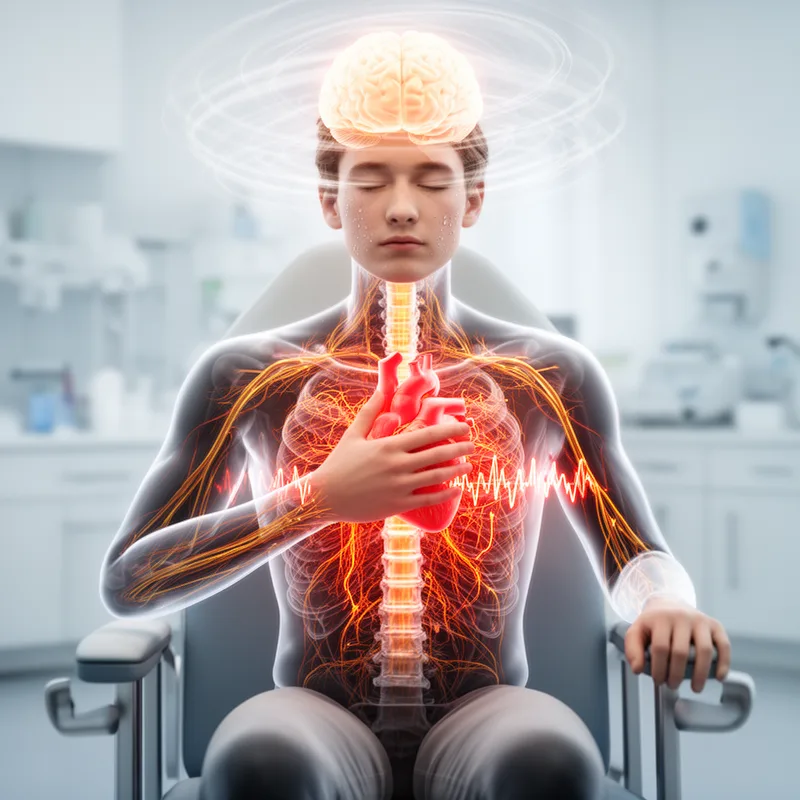
dysautonomia


 1
9.9
- noun
- /ˌdɪsɔːtəˈnoʊmiə/
- Specialized
- Diagnosing dysautonomia can be difficult, as its symptoms can mimic other health conditions.
- familial dysautonomia
Loading YouTube…
Watch on YouTubeWe treat a lot of people with dysautonomia from long COVID as a symptom.
- We treat a lot of people with dysautonomia from long COVID as a symptom.
Examples
-
I wish that story were a rare one, but it's not for those of us who suffer with EDS/dysautonomia (and of course other chronic illnesses).
Blog text (26) -
A journal of my experiences living with POTS (dysautonomia): getting through the pain and fatigue, fighting for a diagnosis, pressing on towards recovery.
Blog text (13) -
We treat a lot of people with dysautonomia from long COVID as a symptom.
-
Both MECFS and dysautonomia are commonly seen in patients with long COVID.
-
2) You can spell and use words like "promyelocytic," "fibromyalgia," "dysautonomia," "postural orthostatic tachycardia," "myofascial," and "thoracic outlet" in a sentence.
Blog text (29) -
People with dysautonomia often experience dizziness and irregular heartbeats.
-
Many patients with dysautonomia experience fainting spells when standing up suddenly.
Surface Forms
Morphology
Etymology
Dysautonomia comes from parts: dys- meaning 'bad' or 'difficult', auto- meaning 'self', and -nomia meaning 'rule' or 'law', as in autonomy. So dysautonomia is a condition where the body's 'self-rule' (the automatic nervous system) does not work properly, which explains symptoms like dizziness and an irregular heartbeat.