
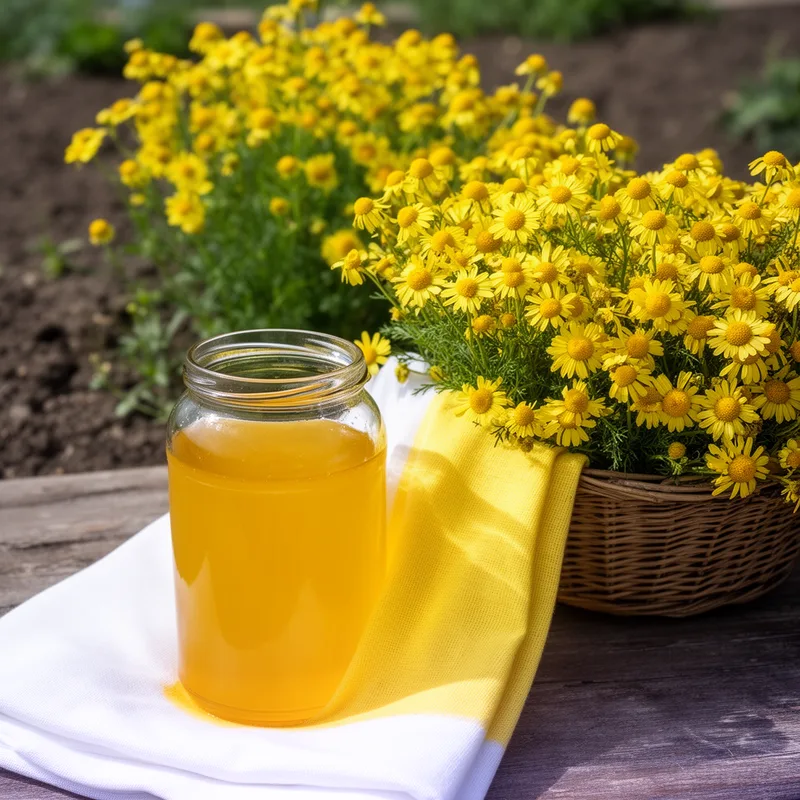
dyers' chamomile
- noun
- /ˈdaɪərz ˈkæməˌmaɪl/
- Specialized
- Textile artists have used dyers' chamomile for centuries to produce beautiful natural yellow dyes.
Examples
-
The fields were dotted with dyers' chamomile, their yellow blooms bright in the sunlight.
-
She planted dyers' chamomile in her garden to attract pollinators and use for her dye projects.
-
The dyers' chamomile is known for its vibrant yellow dye.
-
Many artists prefer using dyers' chamomile for natural dyes.
-
Textile artists have used dyers' chamomile for centuries to produce beautiful natural yellow dyes.
-
She planted dyers' chamomile in her garden to attract pollinators and use for her dye projects.
-
Many artists prefer using dyers' chamomile for natural dyes.
Synonyms

A perennial herb from Europe and Asia with hairy divided leaves and bright yellow daisy-like flowers

A small plant with yellow flowers used to make calming tea
A garden plant with bright yellow daisy-like flowers that lives many years
Surface Forms
Morphology
dyers' + chamomile
The phrase is compositional: 'dyers'' (people who dye) + 'chamomile' (the plant) yields a chamomile associated with dyers, i.e. the variety used for dyeing. The possessive/genitive pattern indicating purpose or association is a common, transparent construction that a B1 learner who knows both constituents can readily interpret.
Etymology
Dyers' chamomile was named for its bright, chamomile-like yellow flowers that people used to make 'yellow dye'. So the name links dyers', meaning people who dyed cloth, and chamomile to show the plant's use.

