

to dung
7.7
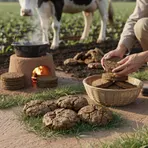
To put animal waste on soil to make plants grow better
- verb
- /dʌŋ/
:
abonar
- Farmers often dung their fields to improve soil quality.
Examples
-
The farmer decided to dung the fields before planting the new crops.
-
They dunged the land in spring to improve soil fertility.
-
It is important to dung the vegetable garden annually for better yield.
-
He dunged the garden last spring.
-
The farmer decided to dung the fields before planting the new crops.
-
It is important to dung the vegetable garden annually for better yield.
-
Farmers often dung their fields to improve soil quality.
Synonyms


Antonyms

Compounds

Surface Forms
Etymology
The verb dung also grew from the idea of putting animal dung on fields to help them grow. So to dung land means to 'fertilize' it with animal dung.