
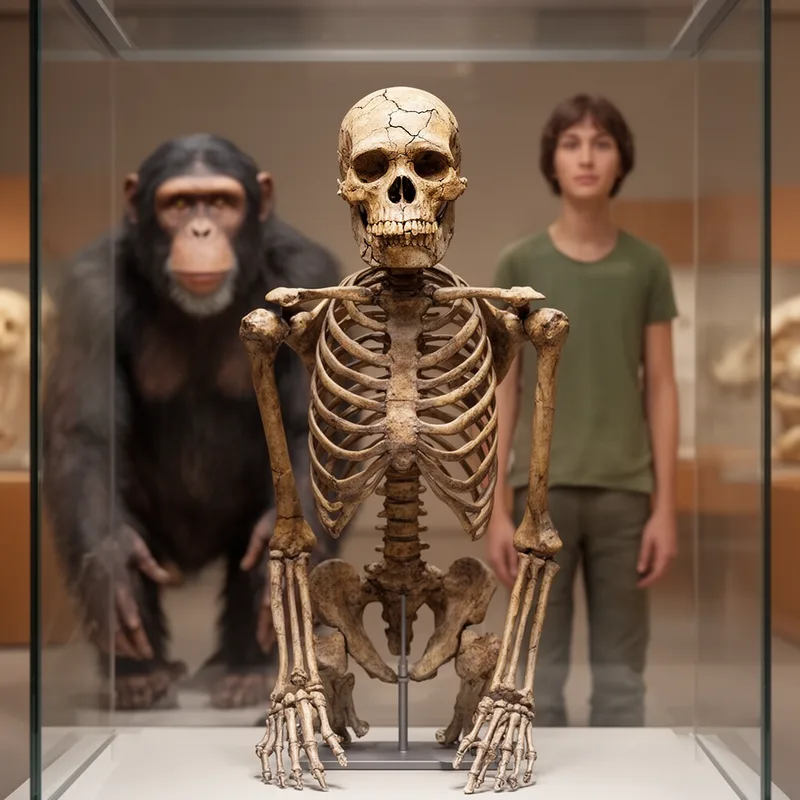
dryopithecine
- noun
- /ˌdraɪəˈpɪθəˌsiːn/
- Specialized
- The dryopithecine species lived millions of years ago.
- African dryopithecine
Examples
-
Scientists believe that studying dryopithecines can provide insights into the ancestry of anthropoid apes.
-
Museums often display dryopithecine skulls alongside those of other prehistoric primates.
-
Paleontologists believe the dryopithecine may bridge the gap between early apes and humans.
-
The discovery of a fossilized dryopithecine jaw shed light on ape evolution.
-
Fossils of dryopithecines have been discovered in Europe.
-
The dryopithecine is considered an important link in the evolution of modern apes and humans.
-
Fossils of dryopithecines have been found in various locations, indicating their widespread existence in prehistoric times.
Synonyms
An extinct ape that lived long ago in parts of Europe and Asia, often in trees

An extinct early ape from Africa that lived long ago
Surface Forms
Morphology
dryopithecine = Dryopithecus (opaque) = dryo + pithec + ine
Although built from classical combining forms and a taxonomic suffix, the components are technical and not interpretable by average learners, so the meaning is not derivable from the parts.
Etymology
Dryopithecine comes from Greek parts dryo- meaning 'tree' and pithekos meaning 'ape'. So a dryopithecine is a 'tree ape', and that name helps explain why scientists think these extinct apes from forests may be early relatives of modern apes and humans.

