
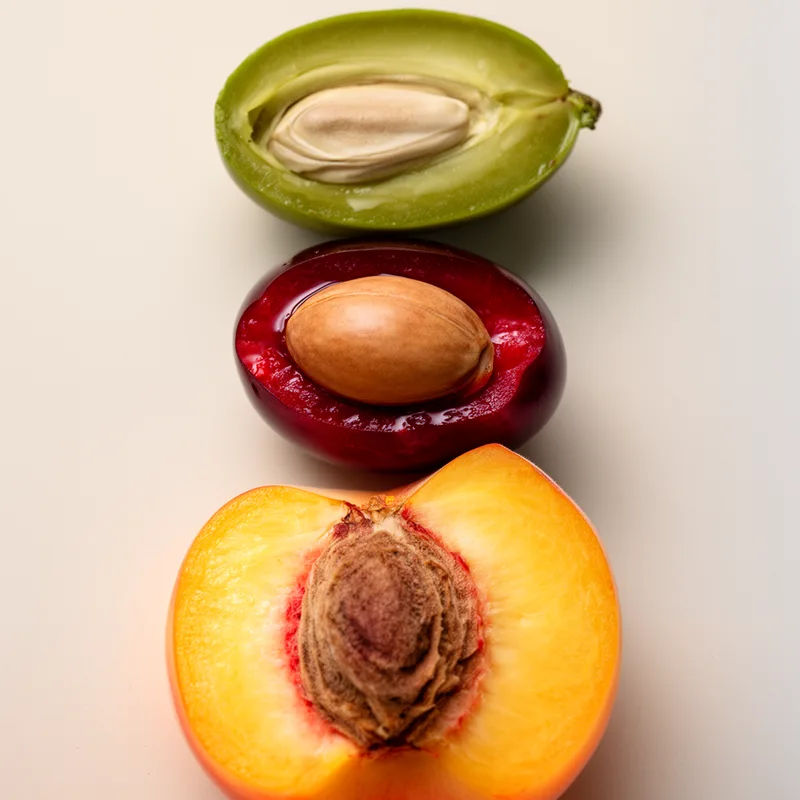
drupaceous


 1
9.9
- adjective
- /ˌdruːˈpeɪʃəs/
- Specialized
- The peach is a classic example of a drupaceous fruit.
Examples
-
The drupaceous nature of cherries makes them distinct from berries.
-
The drupaceous fruits of the cherry tree are quite popular.
-
Botanists often categorize olives as drupaceous because of their structure.
-
Many drupaceous plants thrive in warm climates.
-
The mango is a drupaceous fruit known for its sweet, juicy flesh and a large pit inside.
-
Many drupaceous fruits, such as cherries and peaches, have a characteristic hard seed surrounded by soft flesh.
-
In the orchard, the gardener carefully examined the drupaceous fruits to see which ones were ripe for harvesting.
Surface Forms
Morphology
Etymology
Drupaceous comes from the simple word drupe, which originally meant an 'olive' or a small 'stone fruit'. So, something described as drupaceous has a soft, fleshy outside and a single hard 'stone' around the seed, like a peach, cherry, or olive.