
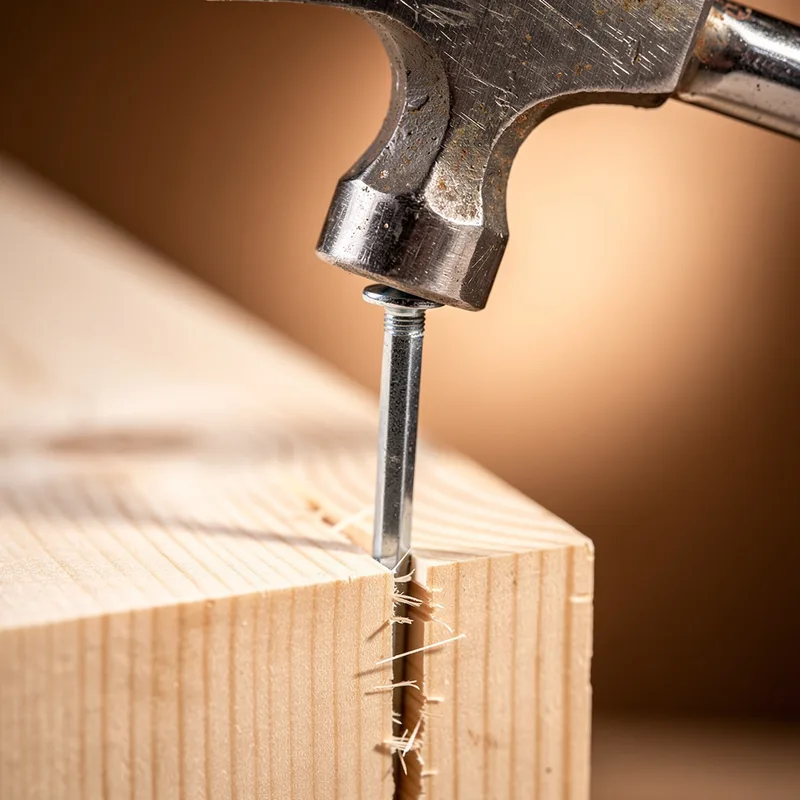
to drive in
 7
4.0
7
4.0

- phrasal verb
- /draɪv ɪn/
- Before assembling the furniture, make sure to drive in all the screws securely.
- drove in a nail
- drive in a screw
- drive around
Examples
-
Couldn't drive a pick in the ground around here.
-
I was in the low post, I was driving it in hard.
-
If I take you back, the police are gonna drive a long nail in here.
-
Lanz came up with a big hit to drive in a key run in the Giants' victory.
-
Then you can just drive in all the screws and it'll be done and we'll just start down there.
-
In the cannon's touchhole is an iron spike—a replica of the one Ethan Allen drove in.
Fiction book (1992) -
Using a hammer, you can drive in the nails to hold the wooden planks together.
-
To install the shelf, you need to drive in the brackets into the wall.
Synonyms
 1
2.8
1
2.8
Attach something to a wall or wood by turning a metal piece into it
Antonyms


How Firmly

Surface Forms
Morphology
The sense 'to force something into a surface' is a direct compositional combination of 'drive' (to push or strike/force) + 'in' (into), so the overall meaning is predictable from the parts. Although 'drive' has vehicle-related senses, the verb+particle pattern meaning 'force X in' is common and cross-linguistically transparent, so a B1 learner who knows both constituents should be able to infer the MWE.
Etymology
The verb drive in comes from the literal action of drive and in, forcing a nail, screw, or bolt into wood or metal with a hammer or drill. That's why it means 'to push something into a surface'.