
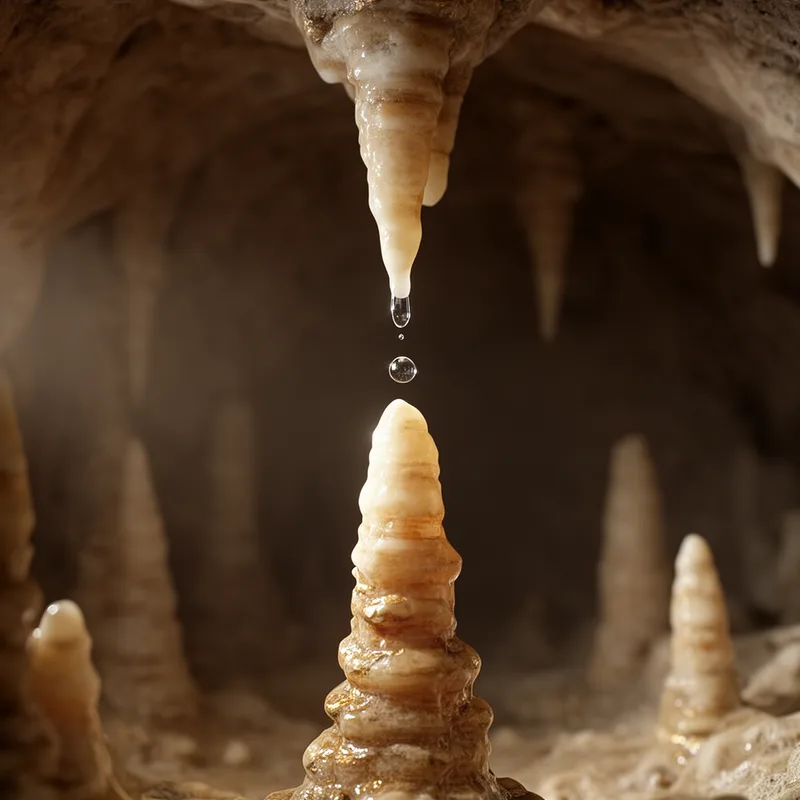
dripstone
- noun
- /ˈdrɪpˌstoʊn/
- Specialized
- As we explored the cave, we noticed many shapes of dripstone that had formed over thousands of years.
Examples
-
In some places, the ceiling dripstone had joined with the floor dripstone, forming pale, knobby
Fiction book (1993) -
The cave was filled with stunning formations of dripstone, which sparkled under the flashlight.
-
I saw ceilings festooned with dripstone.
Fiction book (1993) -
In some places, the ceiling dripstone had joined with the floor dripstone, forming pale, knobby
Fiction book (1993) -
I took her to fist; she looked unharmed and walked among the dripstone.
Fiction book (1993) -
One of the smaller, floating dragons jostled against a stone icicle near the bottom of the cave; the dripstone crashed to the ground, shattering, clattering, echoing against the walls.
Fiction book (1993) -
Visitors marveled at the majestic dripstone hanging from the ceiling, creating a unique natural decoration.
Surface Forms
Morphology
Etymology
Dripstone comes from the simple parts drip and stone, meaning 'stone made by drops of water'. These are the cave formations, like stalactites and stalagmites, that grow as water drips and leaves mineral behind, so the name matches what they are.

