
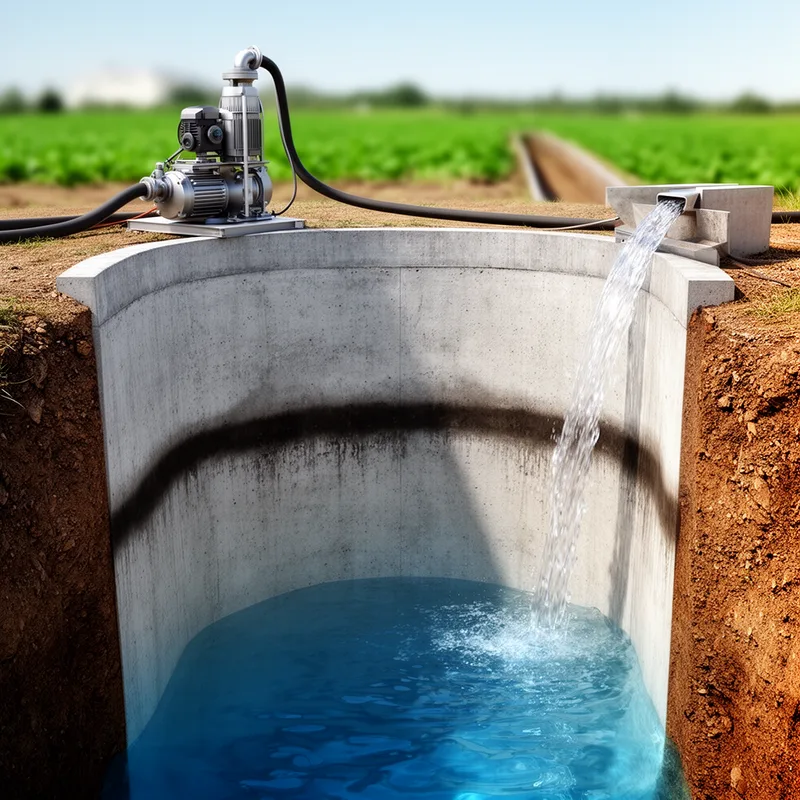
drawdown


 1
7.2
1
7.2
- noun
- /ˈdrɔːˌdaʊn/
- Specialized
- During the summer months, a significant drawdown occurred due to increased water usage for irrigation.
- a drawdown of water
Examples
-
Drawdown of scarce water resources for irrigation.
Academic text (2007) -
As a lake or reservoir is drained, drawdown increases.
Academic text (1996) -
The drawdown is the difference between the in situ driving pressure and the driving pressure in the wellbore.
Academic text (1991) -
Drawdown is the vertical distance between the full-level stage of a reservoir or lake and any given water level lower than that stage.
Academic text (1996) -
In porous materials, pumping wells produce drawdowns that vary symmetrically with radial distance.
Academic text (1997) -
For instance, the level of water in a reservoir is a state; drawdowns represent a change in that state, and comparisons of these variables over time can reveal cause-and-effect relationships such as the impact of conservation policies on water usage.
Academic text (1998) -
In the St. Mary River in Alberta, Canada, for example, rapid drawdowns of river stage during spring have prevented the recruitment of young trees (Rood and Mahoney 1990).
Academic text (1997) -
A major complication arises, however, because the drawdowns in the confined aquifer will induce leakage from adjacent confining units.
Academic text (2006) -
After several weeks of continuous pumping, the drawdown in the aquifer became noticeable and affected nearby wells.
-
The drawdown of water levels in the reservoir was necessary to carry out maintenance work on the dam.
Synonyms
 43
3.5
43
3.5
Removing liquid so it flows away from a place or object
 40
5.3
40
5.3
A decrease in how much of something is left, often until it is used up
How Much

Surface Forms
Morphology
Etymology
Drawdown comes from the parts draw ('take out', as when you 'draw water') and down ('lower'). Think of people pulling water out and the level going down. So, a drawdown is the fall in water level when you pump or remove water.