
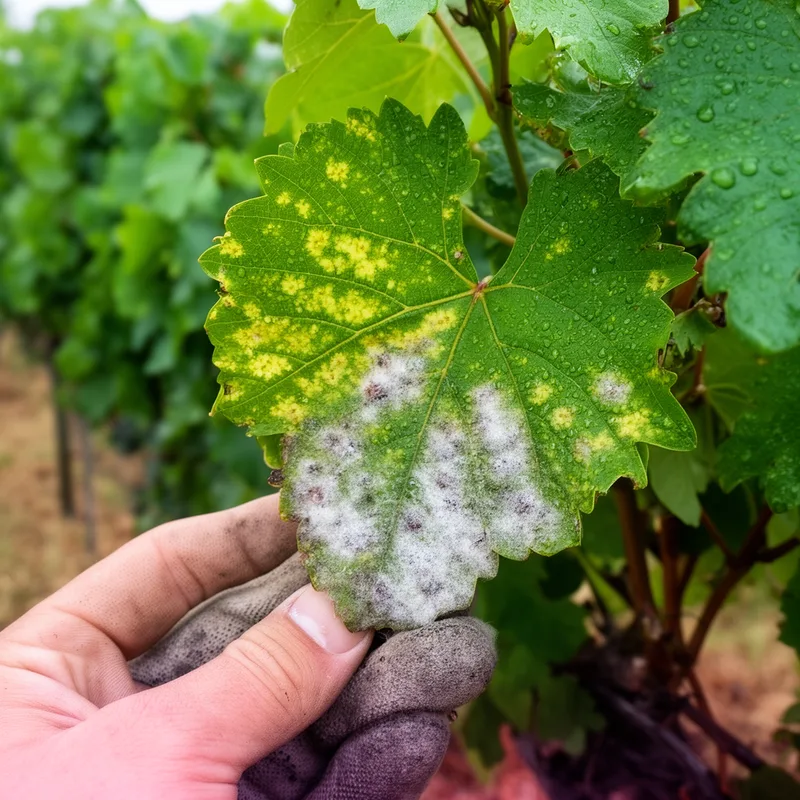
downy mildew
- noun
- /ˈdaʊni ˈmɪldu/
- Specialized
- Photo (black & white): A control grape leaf (right) infected with downy mildew (Plasmopora viticola) is shown next to a leaf treated with compost tea.
- powdery and downy mildew
Examples
-
The presence of downy mildew on the leaves can significantly reduce the quality of grape harvests.
-
During the summer, downy mildew thrives in moist conditions, affecting crops like potatoes and melons.
-
To combat downy mildew, farmers must monitor their fields and implement proper plant care strategies.
Synonyms

 17
2.9
17
2.9

A thin white fungus that grows on damp plants, cloth, or walls
Surface Forms
Morphology
The meaning is directly compositional: 'downy' describes a soft, hair-like appearance and 'mildew' names a fungal growth, so the phrase denotes a mildew with a downy appearance (i.e., the plant disease caused by such growth). This adjective+noun pattern is transparent and predictable, so a B1 learner who knows both constituents can infer the MWE's meaning.
Etymology
Downy mildew is named for how it looks: downy means soft and fluffy like small feathers, and mildew is a kind of mold that grows on leaves. Picture the underside of a leaf covered in pale, feather-like fuzz; this 'fuzzy mold' image explains why the name now means a disease that makes fuzzy, moldy patches on plants.