
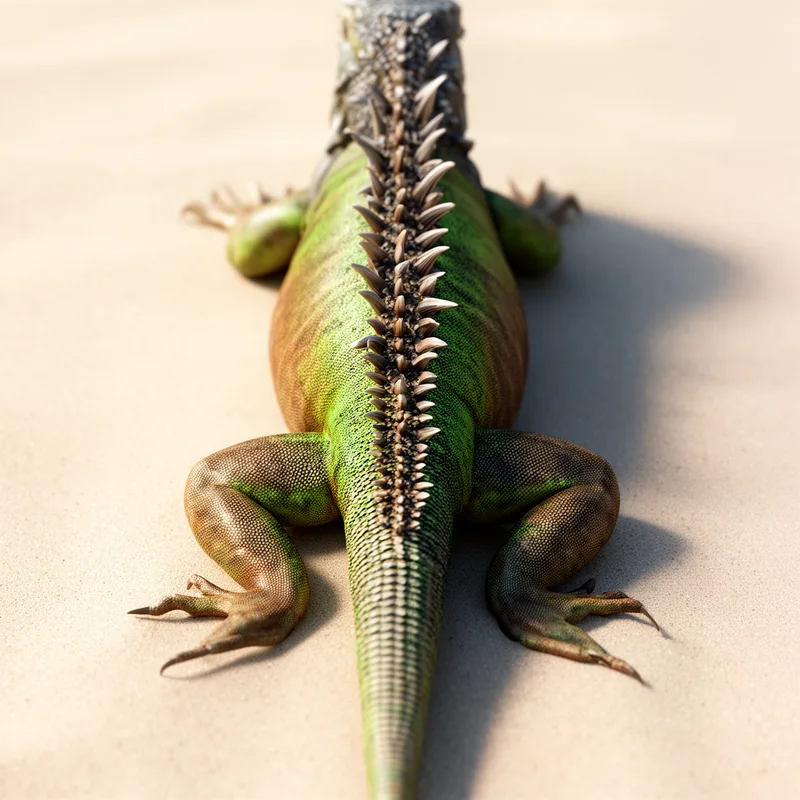
dorsally


 1
7.9
1
7.9
- adverb
- /ˈdɔːrsəli/
- Specialized
 :
dorsalmente
:
dorsalmente
- The turtle swims with its shell oriented dorsally toward the surface of the water.
Examples
-
The most important difference, from our perspective, is that Tritonia flexes dorsally and ventrally, while Melibe flexes its body laterally, from side to side. See illustrations on pages 38-39.
Academic text (2009) -
The most common type of phalangeal neck fracture is type II fractures that are usually displaced dorsally (1).
Academic text (2012) -
This is the part that comes up dorsally, and they look different.
-
Very few fibers course dorsally.
Academic text (2003) -
The skull of Pakicetus has orbits that are high on the side of the skull and face up, or dorsally (Figure 9).
Academic text (2001) -
The axons leave the motor nucleus and extend dorsally, medially, cranially, and superficially.
Academic text (2003) -
The EBSLN then descends along the larynx and crosses dorsally to the superior thyroid artery.
Academic text (2005) -
Mab-9 mutants exhibit guidance defects in dorsally projecting axons from motor neurons located in the ventral nerve cord.
Blog text (10) -
The fish's gills are located dorsally, allowing for efficient breathing while swimming.
-
In the anatomy lab, we observed how the muscles attach dorsally to the spine.
Surface Forms
Morphology
Etymology
Dorsally comes from the Latin root dorsum, which means 'back', and it is the same root in dorsal. So to say something is dorsally located means it is on or toward the 'back' or upper side of an animal, like the dorsal fin of a fish.