
doping
 1
6.5
1
6.5

- noun
- /ˈdoʊpɪŋ/
- Specialized
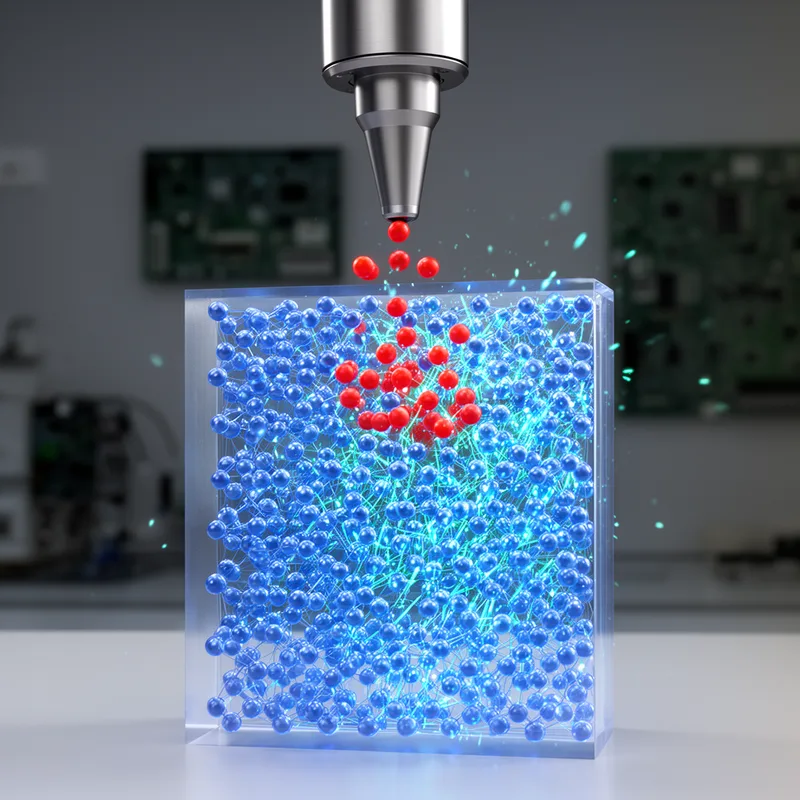
- By varying the density of the doping impurities, one can design the silicon to range from a poor conductor of electricity to a near-metallic conductor.
Loading YouTube…
Watch on YouTubeAnd you do that via a process called doping.
- And you do that via a process called doping.
Examples
-
In semiconductor physics, doping is used to alter the electrical properties of materials like silicon.
-
So let's look at how doping works in silicon.
-
So I can change the doping and change that Fermi level.
-
As mentioned earlier, doping with more lanthanum ions will bring more oxygen vacancies.
Academic text (2018) -
Doping would, of course, hugely decrease the conductivity.
Blog text (1) -
Doping generally refers to the process of implanting impurities into semiconductors in order to introduce excess charge carriers.
Blog text (1) -
The process of doping involves adding impurities to enhance the conductivity of the semiconductor.
-
Researchers are studying how different elements used in doping can affect the efficiency of solar cells.
Compounds

Surface Forms
Morphology
Etymology
Doping comes from dope, an old word for a 'thick liquid' and later for a 'drug' or small additive. In electronics it means adding a tiny amount of another element to change how a material behaves, so think of it as adding a drop that changes the whole substance.