

to domesticate
 32
4.1
32
4.1

- verb
- /dəˈmɛstəˌkeɪt/
- Specialized
- Over centuries, humans have learned to domesticate various animals for companionship and work.
- domesticate animals
- domesticate livestock
- domesticate crops
Loading YouTube…
Watch on YouTubeAnd for that, my simple explanation is that they are domesticating us.
- And for that, my simple explanation is that they are domesticating us.
- Just to, just to, to, you know, that's how, for example, we domesticate dogs, right?
- People on the western EUR Asian steppe domesticated horses.
- The other thing we notice is when we domesticate them, they outperform their wild cousins.
- So measles went from cows to humans when humans learn to domesticate cows and and started gathering in big cities.
- So similar to how we domesticated wolves and turn them into dogs that are very clear in their expression, they're very aligned, right?
- And then suddenly man figured out how to domesticate animals and agriculture evolved and LED to civilization.
- We had then we had land, We had domesticated animals and for the first time private property came into play.
Examples
-
And then suddenly man figured out how to domesticate animals and agriculture evolved and LED to civilization.
-
The place where the plant or animal was domesticated was also identified.
Academic text (1992) -
The other thing we notice is when we domesticate them, they outperform their wild cousins.
-
People of sense and good judgment do not attempt to domesticate a griffin.
Fiction book (1995) -
Just to, just to, to, you know, that's how, for example, we domesticate dogs, right?
-
We also started to domesticate animals, and so viruses that were living in animals in the past started to infect humans.
-
A chicken is a widely domesticated Earth fowl.
-
Rice is simply declared to have been domesticated in midlatitude China, not tropical Asia.
Academic text (1999) -
When the Yayoi brought domesticated rice from the mainland to Japan, they changed the islands forever.
Academic text (2008) -
Its people were semi nomadic pastoralists who domesticated cattle, dogs and above all horses.
Synonyms
 68
3.0
68
3.0
To make something less wild or strong
 1
5.6
1
5.6
To make a wild animal calm and accept people
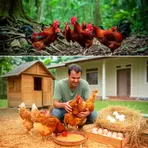
To make a wild animal or plant tame so it can live with people and provide food
How Tame

Surface Forms
Morphology
Etymology
Domesticate comes from the Latin word domus, which means 'home'. So to domesticate a plant or animal is to bring it into people's 'home' — to tame or grow it for human use, which explains the modern meaning.