

domestic ass
- noun
- /dəˈmɛstɪk æs/
- The domestic ass has served humanity as a beast of burden for thousands of years.
Examples
-
Unlike horses, the domestic ass is known for its patience and endurance.
-
Farmers often rely on the domestic ass for carrying loads over rough terrain.
-
The domestic ass is known for its strength and endurance.
-
Many farmers rely on the domestic ass for transportation.
-
Farmers often rely on the domestic ass for carrying loads over rough terrain.
-
The domestic ass has served humanity as a beast of burden for thousands of years.
-
Many farmers rely on the domestic ass for transportation.
Synonyms

 233
1.0
233
1.0

A small, strong animal like a horse with long ears used to carry loads
 111
1.0
111
1.0
A small animal like a horse with long ears often used to carry loads
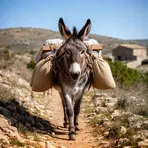
An animal people keep like a small horse that they use to carry things
Antonyms

 1
7.4
1
7.4
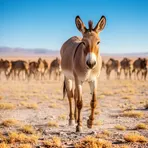
A large wild animal like a donkey that lives on dry plains in Asia and northeast Africa
Surface Forms
Morphology
The meaning 'a domesticated ass / donkey' is directly and compositionally derived from combining 'domestic' (domesticated, adapted for human use) with 'ass' (a small equine), so the overall sense is predictable from the parts. This adjective+noun combination is a common, literal pattern found across languages and would be readily understood by a B1 learner who knows both constituents.
Etymology
Domestic ass puts together domestic, meaning kept by people, and ass, an old word for donkey. Because people long used donkeys to carry loads and work on farms, the phrase came to mean 'a donkey used as a work animal'.