
divisionism
- noun
- /dɪˈvɪʒənɪzəm/
- Specialized
- "The prosecution of Ingabire for 'genocide ideology' and divisionism illustrates the Rwandan government's unwillingness to tolerate criticism and to accept the role of opposition parties in a democratic society," said Daniel Bekele, Africa director at Human Rights Watch.
Examples
-
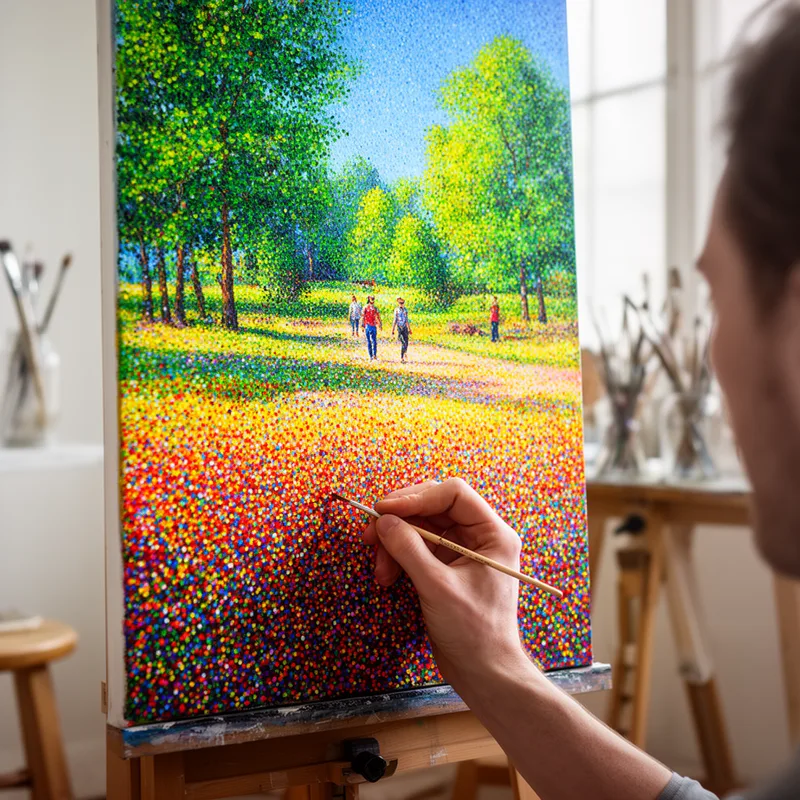
The artist used divisionism to create vibrant landscapes with colors that blend together when viewed from a distance.
-
He was arrested on June 24, 2010, just weeks before the presidential elections, and charged with endangering national security, "divisionism," and attempting to organize demonstrations without authorization.
Blog text (26) -
The following quotation from 1913 is highly representative: "Present-day life, more fragmented and faster moving than life in previous eras, has had to accept as its means of expression an art of dynamic divisionism."
Academic text (2002) -
Internally, nationalism—traced to a common geography, language, memory of traditions, and historical past—has contributed to the breakdown of feudalistic particularism and divisionism.
Academic text (1991) -
The prosecution of Ingabire for "genocide ideology" and divisionism illustrates the Rwandan government's unwillingness to tolerate criticism and to accept the role of opposition parties in a democratic society.
Blog text (26) -
Georges Seurat's work exemplifies divisionism, showing how separate colors can create a harmonious image through optical blending.
-
Both Seurat and Signac were pioneers of divisionism, using this method to transform the perception of color in art.
Synonyms

 1
9.6
1
9.6

A painting method using small dots of color to make a picture
Surface Forms
Morphology
Etymology
Divisionism comes from the word divide, which means 'to separate', and the ending -ism, which marks a 'style'. Artists called this painting method divisionism because they 'separate' colors into small dots or patches so the eye mixes them from a distance, which is exactly what the word describes.