
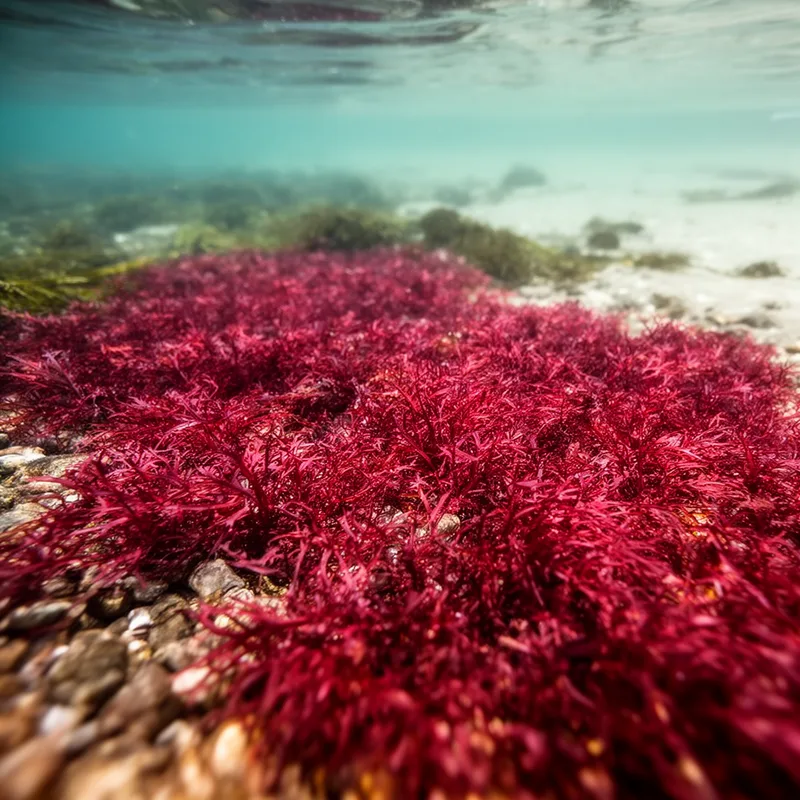
division Rhodophyta
- noun
- /dɪˈvɪʒən roʊˈdɒfɪtə/
- Specialized
- The division Rhodophyta includes many species of red algae.
Examples
-
Many species in the division Rhodophyta are important sources of agar and carrageenan.
-
The vivid color of division Rhodophyta makes them easy to spot among other seaweeds.
-
Scientists are studying the genetic diversity within division Rhodophyta.
-
Many researchers study division Rhodophyta for its ecological importance.
-
Many species in the division Rhodophyta are important sources of agar and carrageenan.
-
Scientists are studying the genetic diversity within division Rhodophyta.
-
The vivid color of division Rhodophyta makes them easy to spot among other seaweeds.
Synonyms

 1
4.3
1
4.3

People use small red or purple sea plants to make foods like nori and agar

A group of mostly marine red algae with red pigments

Red algae that live mostly in the sea and are often used to make food products like agar
Surface Forms
Morphology
This is a straightforward compositional taxonomic noun phrase: 'division' (a plant taxonomic rank) combined with 'Rhodophyta' (red algae) yields the taxonomic group of red algae. The meaning follows directly from the constituents and the standard biology naming pattern found across languages, so a learner who knows both words can infer the MWE's meaning.
Etymology
Division Rhodophyta comes from two parts: rhodo- meaning 'red' and -phyta meaning 'plants', so it pictures red plants in the sea. That's why the term refers to the group of red algae often found near coasts.