
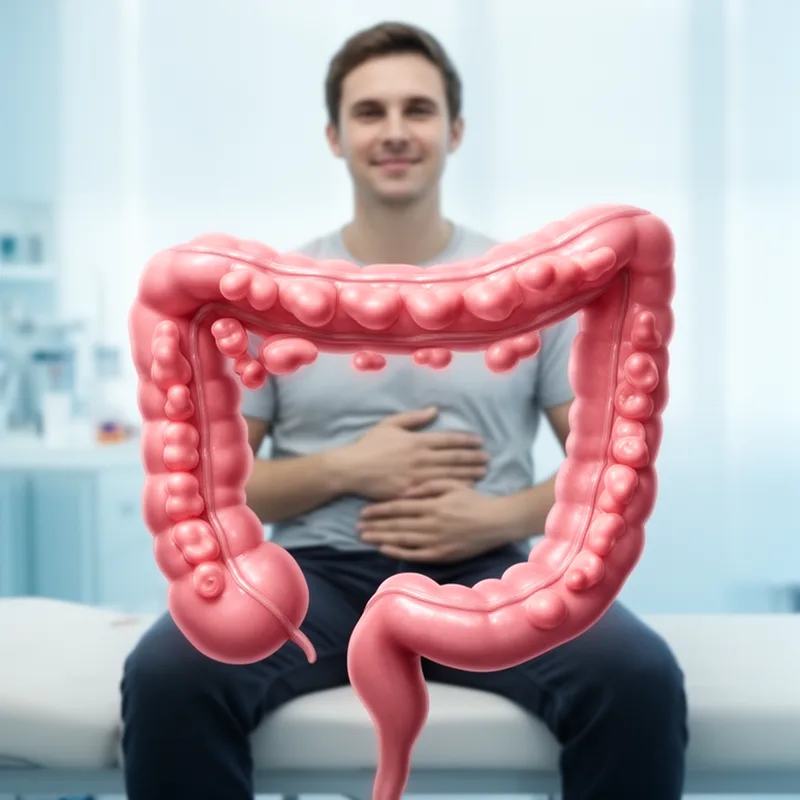
diverticulosis


 1
9.9
- noun
- /ˌdaɪvɜrˌtɪkjʊˈloʊsɪs/
- Specialized
- In other studies, getting adequate dietary fiber has been shown to lower cholesterol as well as the risk of heart disease, diabetes, diverticulosis, and obesity, and to protect against cancer through a variety of mechanisms, including providing food for beneficial bacteria in the gut.
Loading YouTube…
Watch on YouTubeAnd part of the challenge with knowing is that people who have this issue, diverticulosis, they don't have symptoms.
- And part of the challenge with knowing is that people who have this issue, diverticulosis, they don't have symptoms.
Examples
-
A 38-year-old man with tracheomegaly, tracheal diverticulosis, and bronchiectasis. Chest 2001; 120(3): 1018-20.
Academic text (2008) -
You've heard of diverticulosis and diverticulitis, right?
-
And part of the challenge with knowing is that people who have this issue, diverticulosis, they don't have symptoms.
-
Many older adults develop diverticulosis without even realizing it, as it often has no symptoms.
-
A doctor may discover diverticulosis during a routine check-up or imaging test.
-
To manage diverticulosis, it's important to maintain a high-fiber diet and stay hydrated.
How Symptomatic
- Specialized
5
8.3

- Specialized
1
9.9
Surface Forms
Morphology
diverticulosis = diverticulum (semi-transparent) = diverticul + osis
The formation uses a medical combining form plus the suffix '-osis' to indicate a condition, which is clear to those familiar with medical terms but not fully transparent to an average B1 learner.
Etymology
Diverticulosis comes from diverticulum, a word for a small pouch that is related to divert, 'to turn aside', and the ending -osis, 'condition'. So diverticulosis is the condition of having many small pouches in the colon.