
to diverge
 1
9.6
1
9.6

- verb
- /dɪˈvɜrdʒ/
- Specialized
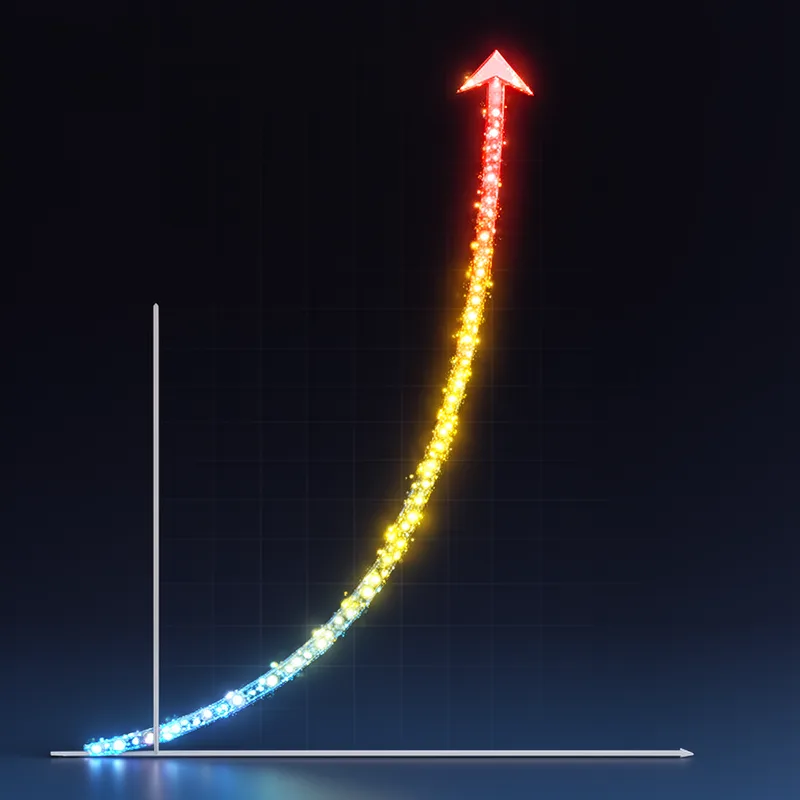
- The velocity is found to diverge as ln(ln N) in the large population limit.
Loading YouTube…
Watch on YouTubeOne possibility is that this curve just diverges as Z approaches one.
- One possibility is that this curve just diverges as Z approaches one.
Examples
-
If this integral diverges, then your series diverges.
-
As the equation was simplified, the terms began to diverge, leading to an unbounded solution.
-
The first two methods diverge in their predictions when the velocity approaches its maximum value.
Academic text (1997) -
If the model diverges from reality, there's something wrong with the model, not with reality.
Blog text (16) -
One possibility is that this curve just diverges as Z approaches one.
-
Although the conductivity is finite at all finite temperatures, he says, it does appear to diverge as the temperature heads toward absolute zero.
Academic text (2004) -
Extrapolating back in time, the time series diverges from the recent linear trend about 16 years ago.
Blog text (31) -
Small variations in input—within the range of feasible inputs—cause the solution to diverge exponentially with time.
Blog text (34) -
The series of calculations will diverge if the initial values are not properly defined.
-
In this scenario, the results will diverge to infinity, indicating the model's limitations.
Antonyms


- Specialized
3
6.6
To get closer to a fixed number as more terms are added or as a variable changes
Surface Forms
Morphology
Etymology
Diverge comes from parts meaning 'apart' (di-) and 'to turn' (vergere). A helpful way to remember the math sense is to picture sums or numbers 'moving apart' and growing with 'no limit', which is why a series that keeps growing is said to diverge.