

diuresis
 1
9.6
1
9.6

- noun
- /ˌdaɪjʊˈriːsɪs/
- Specialized
- Increased diuresis overnight was a concern for the team monitoring the patient's fluid balance.
- osmotic diuresis
- diuresis with the loss
Loading YouTube…
Watch on YouTubeAnd this is going to cause a diuresis or a urinating out of all this excess fluid that you've been holding.
- And this is going to cause a diuresis or a urinating out of all this excess fluid that you've been holding.
Examples
-
Other symptoms of migraine include fatigue, carbohydrate cravings, and increased diuresis.
Academic text (2011) -
The doctor explained that diuresis can occur even without additional water intake, affecting kidney function.
-
It is important, therefore, to remember that diuresis that results from taking these drugs is a positive effect rather than a side effect.
Academic text (2011) -
And this is going to cause a diuresis or a urinating out of all this excess fluid that you've been holding.
-
Mrs. McKay has osteoarthritis and poor mobility; will increased diuresis exacerbate her problems?
Academic text (1999) -
Acute hyperglycemia involving glucose levels that are extremely high is a medical emergency as it can rapidly produce serious complications (particularly fluid loss through osmotic diuresis).
Academic text (2012) -
After several tests, the diagnosis revealed that her diuresis was not linked to diet or medication.
Synonyms

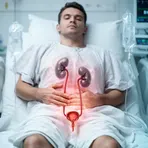
A condition in which the body makes too much urine, often from diabetes or kidney problems
Antonyms

How Much Urine

Surface Forms
Morphology
diuresis = diur + esis
A specialist medical term formed from Greek combining forms ('diur-' + '-esis'); the elements are technical and not transparently meaningful to an average B1 learner.
Etymology
Diuresis comes from Greek parts dia- 'through' and ourein 'to urinate'. It is like the word diuretic and the English word urine, so it means a 'flow through' of urine or increased urination.