
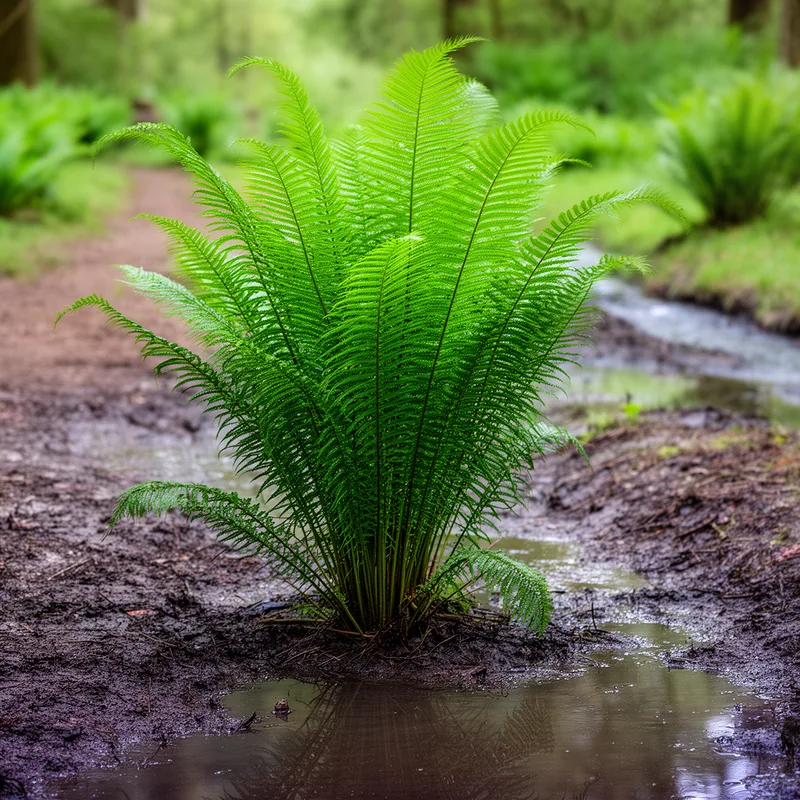
ditch fern
- noun
- Specialized
- Gardeners often plant ditch ferns to add a lush, green backdrop to shaded gardens.
Examples
-
The ditch fern thrives in damp, open areas near streams and ditches.
-
She recognized the distinctive fronds of the ditch fern along the woodland path.
-
The ditch fern thrives in wet environments.
-
Look at that ditch fern!
-
Gardeners often plant ditch ferns to add a lush, green backdrop to shaded gardens.
-
The ditch fern thrives in damp, open areas near streams and ditches.
-
She recognized the distinctive fronds of the ditch fern along the woodland path.
Synonyms

A large fern with feather-like leaves that grows in moist shady places

A large fern with tall feathery leaves that grows in wet places
A plant with large upright feather-like leaves that grows in wet, shady places

A large fern with deep roots and long divided leaves that grows on hills and in woods
Surface Forms
Morphology
ditch + fern
The meaning 'a fern that grows in or near ditches' is directly and compositionally derived from combining 'ditch' (a trench or water channel) with 'fern' (a type of plant); it names a type/habitat of fern. This noun+noun compounding pattern is a regular, cross-linguistically common way to form descriptive plant names, so a B1 learner who knows both words would readily infer the meaning.
Etymology
Ditch fern comes from a simple picture: it is a fern that often grows in wet ditches and beside streams. So the name just tells you the plant's usual home, meaning 'a fern that grows in damp places'.

