
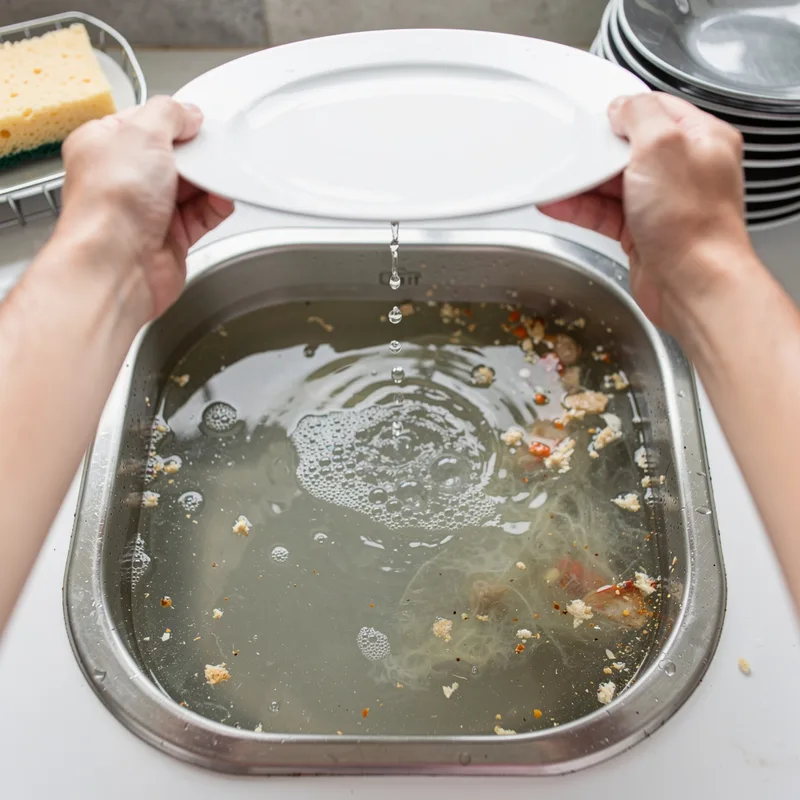
dishwater
 3
1.1

- noun
- /ˈdɪʃˌwɔːtər/
- He filled the bucket with dishwater before starting to scrub the stubborn stains on the plates.
- dirty dishwater
- soapy dishwater
- old dishwater
Examples
-
Lainey stood at the kitchen window in her father's house, her hands in the soapy dishwater.
Fiction book (1990) -
The pot was so greasy that the dishwater turned cloudy as soon as I added it.
-
"Daughter, be sure to run that dishwater good and hot.
Fiction book (1993) -
That looks like dishwater and one shrimp, and I think it's...
-
And, and our dishwater from Thanksgiving aftermath was coming up their sink.
-
Once inside, he saw that Mandy's hands were not in the dishwater or even drying the dishes.
Fiction book (1991) -
My mother didn't react but began filling the sink with clean dishwater.
Fiction book (1990) -
In the kitchen sink, the dishes went "clink, clank, clunk" in the dishwater.
Fiction book (1997) -
Melissa stood over the kitchen sink, hands submerged in lukewarm dishwater, scrubbing at the well of a coffee cup.
Fiction book (1998) -
After washing the dishes, she emptied the dirty water, which was now just dishwater, down the sink.
Surface Forms
Morphology
Etymology
The word dishwater is simply the two English words dish and water joined together, meaning 'water for washing dishes'. So a helpful way to remember it is this: dishwater is the water left after cleaning plates and pans, often cloudy or greasy from soap and food.