
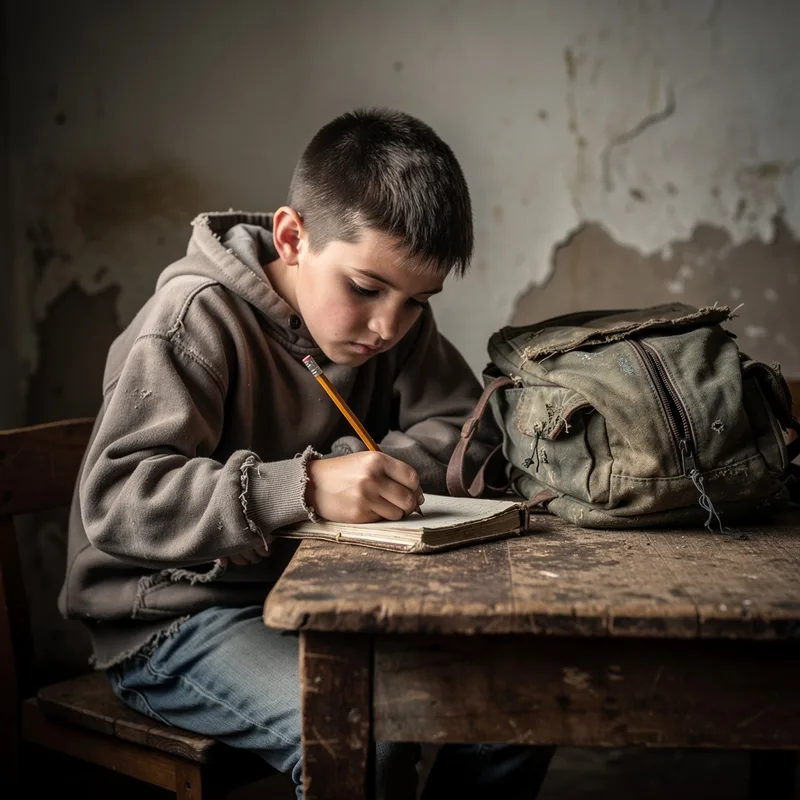
disadvantaged
 34
3.7
34
3.7

- adjective
- /ˌdɪsədˈvæntɪdʒd/
- But So what we try to do is help young people from a disadvantaged background.
- economically disadvantaged
- disadvantaged minorities
- disadvantaged students
Loading YouTube…
Watch on YouTubeThis is going to hurt the poor and disadvantaged kids the most.
- This is going to hurt the poor and disadvantaged kids the most.
- Like I feel disadvantaged that I'm not fluent in multiple languages.
- But So what we try to do is help young people from a disadvantaged background.
- You have two master's degrees and and you work with disadvantaged children.
- What is contradictory about you helping to clarify why we should be doing more for disadvantaged people?
- The old biosocial science casts only socially disadvantaged people, never those in power, as biological threats to society.
- But that said, did I feel disadvantaged?
- The trajectory of your life transformed when you help to this home for disadvantaged boys.
Examples
-
This is going to hurt the poor and disadvantaged kids the most.
-
Bringing up children in a disadvantaged neighborhood is a real struggle for many families.
Academic text (2008) -
You must have so much to talk about with those poor disadvantaged women.
-
You know, help out disadvantaged children.
-
Hi, we're live, and we're helping the economically disadvantaged and it makes me feel so good.
-
Pedestrian safety and access to transportation are important to disadvantaged and disabled populations.
Academic text (2011) -
Hixson Middle provided many challenges, with a large population of economically disadvantaged students.
Academic text (2008) -
The intent of the NCLB reform is to improve classroom instruction and the educational programs for disadvantaged students.
Academic text (2011) -
Community-benefit agreements and community involvement can help prevent the displacement of disadvantaged groups.
Academic text (2011) -
Bringing up children in a disadvantaged neighborhood is a real struggle for many families.
Synonyms
 50
6.2
50
6.2
People or places that have very little money and few things they need
 43
1.5
43
1.5
Without enough food, clothes, or a home and often gets help from others
 24
4.4
24
4.4
People who have less money, chances, or help than others
 22
8.7
22
8.7
Very poor and without enough money for basic needs
 21
3.9
21
3.9
Not having basic things like enough food, a safe home, or clean water
 20
6.5
20
6.5
Very poor and without basic things like food or a home
 14
4.8
14
4.8
Not getting enough help with health or school
 9
5.1
9
5.1
Very poor and needing help to live
 1
6.7
1
6.7
Less liked and given fewer chances than other people


 1
4.2
1
4.2
Not having the same advantages or access to services as other people

Not having extra rights or advantages compared to others
Antonyms


Compounds

- South African
A person who has had less money and fewer chances in the past because people treated them unfairly
How Disadvantaged
20
6.5
 50
6.2
34
3.7
∞
1.0
3
3.7
123
4.8
50
6.2
34
3.7
∞
1.0
3
3.7
123
4.8
Surface Forms
Morphology
disadvantaged = disadvantage (transparent) = dis + advantage + ed
The adjective is a regular participial formation from the verb 'disadvantage' meaning 'placed at a disadvantage'.
Etymology
Disadvantaged breaks into dis- meaning 'not' and advantage meaning 'a benefit' or 'a better position'. So someone who is disadvantaged does not have the usual benefits or fair chances, which explains why they may lack resources or opportunities.