
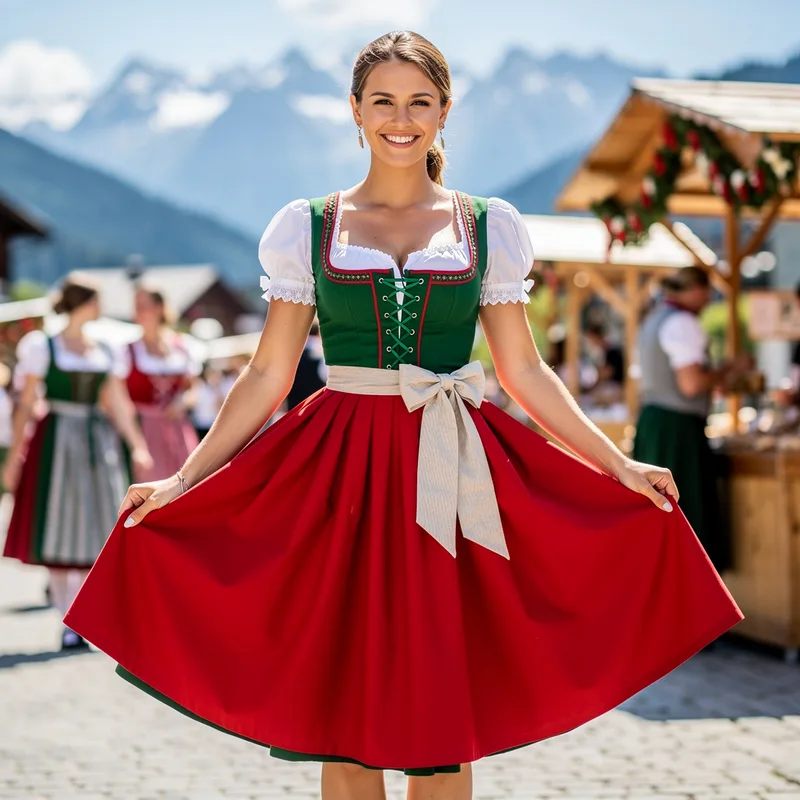
dirndl
 2
9.9

- noun
- /ˈdɪrndl/
- She was dressed in a red-and-white dirndl and bonnet; her long hair was braided.
- dirndl dress
- dirndl skirt
- a white dirndl
Examples
-
She wore a beautiful dirndl to the Oktoberfest celebration, showcasing its traditional design.
-
You are wearing a German dirndl in your Skype photo.
Blog text (5) -
Billowy top with the long dirndl skirt, which is the only skirt women wore in the '70s.
-
The cotton of her dirndl skirt is the light, sheer, unrefined cotton that's almost gauze.
Fiction book (1997) -
Guinness World Records also recognized the world record for the most people dressed in dirndl dress at a single venue, set by 507 people during the Stuttgart Beer Festival.
Blog text (13) -
Each week I'd march myself to Sunday school with my starched dirndl rocking, wanting to be the little savior of the family, to memorize the right answers for everybody.
Fiction book (1994) -
The town actually adopted an "authentic" dress code—lederhosen for men and dirndls for women—and various attempts were made to inspire more residents to look and act the part.
Academic text (2000) -
The brightly colored dirndl featured intricate patterns, making it perfect for the folk dance festival.
-
At the summer fair, many women donned dirndls to celebrate their heritage and enjoy the festivities.
How Traditional


Surface Forms
Etymology
The word dirndl comes from an old German word Dirne meaning 'girl' and the small ending -l meaning 'little', so it originally meant 'little girl'. So a dirndl was the dress worn by girls in the Alps, which is why today it is the traditional women's dress you see at festivals like Oktoberfest.