
diplotene
- noun
- /ˌdɪpləˈtiːn/
- Specialized
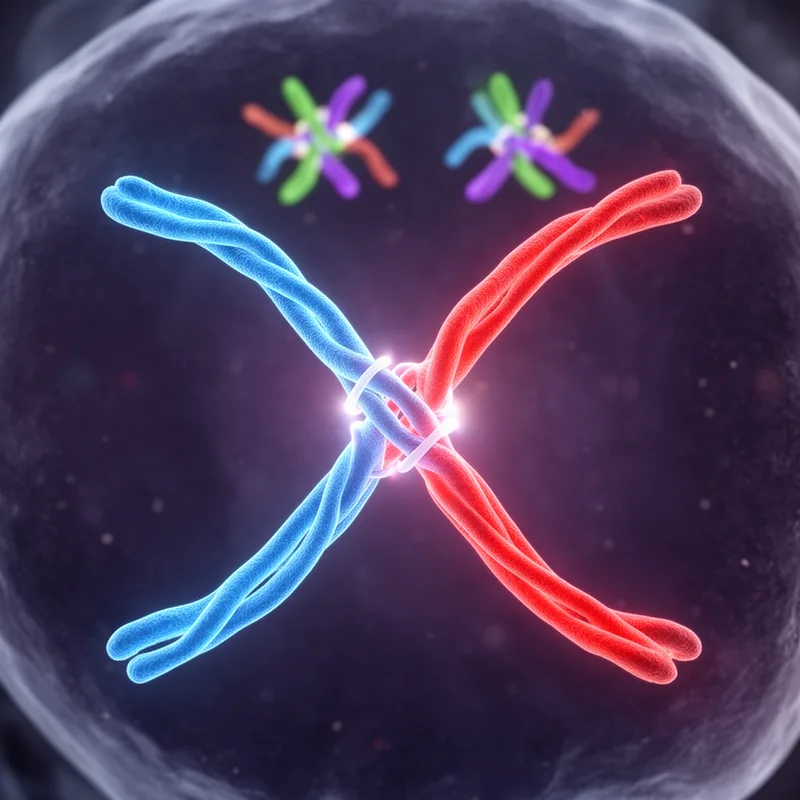
- During diplotene, homologous chromosomes begin to separate but remain connected at chiasmata.
Examples
-
Errors occurring during diplotene may affect genetic variation in gametes.
-
The diplotene stage can be observed with a microscope in laboratory studies of cell division.
-
During diplotene, chromosomes begin to separate.
-
The diplotene stage is crucial for genetic diversity.
-
During diplotene, homologous chromosomes begin to separate but remain connected at chiasmata.
-
Errors occurring during diplotene may affect genetic variation in gametes.
-
The diplotene stage can be observed with a microscope in laboratory studies of cell division.
Surface Forms
Morphology
diplotene = diplo + tene
The combining form 'diplo-' ('double') gives a partial clue about paired chromosomes, but the element '-tene' is a specialized cytological term not meaningful to average learners, so the overall formation is only semi-transparent.
Etymology
Diplotene comes from the Greek parts diplo- meaning 'double' and -tene meaning 'thread' or 'band'. It names the stage in meiosis when the paired chromosomes look like 'double threads' as they begin to pull apart but stay joined, which is why the stage is called diplotene.

