
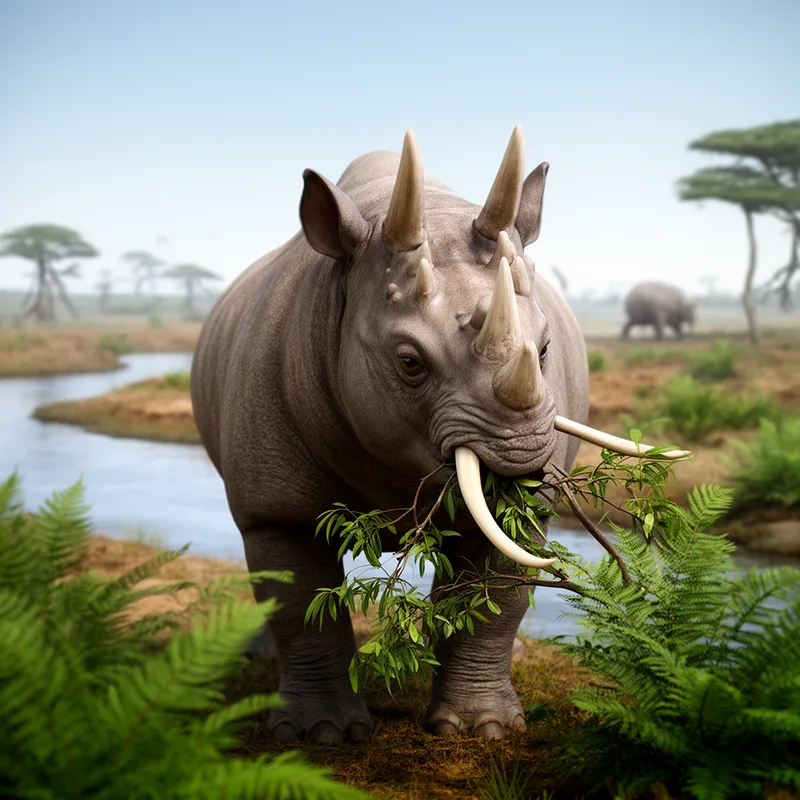
dinocerate
- noun
- /ˈdaɪnəˌsɛrət/
- Specialized
- Unlike modern hoofed animals, the dinocerate possessed both tusks and horns.
Examples
-
The fossilized skeleton of a dinocerate was discovered in the ancient riverbed.
-
Many scientists study dinocerates to understand ancient ecosystems.
-
Scientists believe the dinocerate had three pairs of blunt horns on its skull.
-
The dinocerate was a fascinating creature of the past.
-
The fossilized skeleton of a dinocerate was discovered in the ancient riverbed.
-
Scientists believe the dinocerate had three pairs of blunt horns on its skull.
-
Unlike modern hoofed animals, the dinocerate possessed both tusks and horns.
Synonyms
A large extinct plant-eating mammal with three pairs of bony bumps on its skull
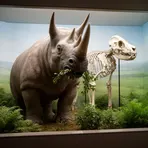
A large horned plant-eating mammal that lived long ago and is now extinct
Surface Forms
Etymology
Dinocerate comes from the Greek roots deinos 'terrible' and keras 'horn', just like the names dinosaur and triceratops. So a dinocerate is a large, horned ancient mammal — a 'terrible-horn' animal known from fossils.

