
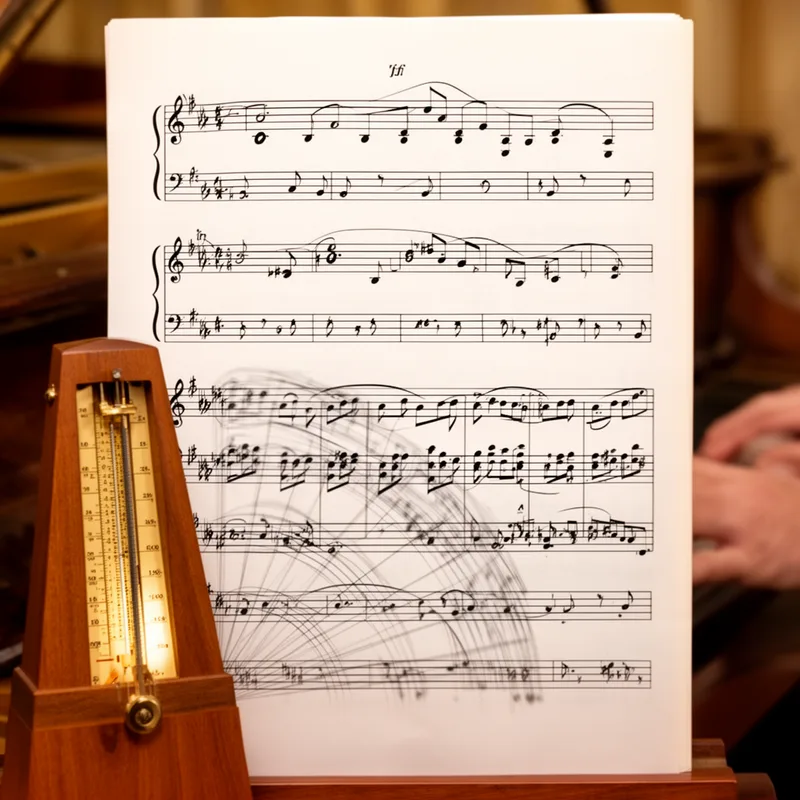
diminution
- noun
- /ˌdɪməˈnjuːʃən/
- Specialized
- Canons can also be performed in augmentation and in diminution.
Examples
-
Its works exploit the psychology of cadence and draw attention to the mathematics of augmentation, diminution, and subdivision, as well as its shifting textures and dynamics.
Academic text (1998) -
These techniques include inversions, sequences, mode changes, diminution, augmentation, rhythmic change, and structural note analysis.
Academic text (2003) -
There was no complaint of headache, vomiting, limb weakness, convulsions, facial asymmetry, and visual diminution.
Academic text (2007) -
In this piece, the composer showcases a stunning diminution of the main theme, using notes that are half the original length.
-
The diminution in the melody creates a sense of tension, emphasizing the emotional impact of the music.
-
During the rehearsal, the conductor asked the musicians to add a diminution to enhance the final movement of the symphony.
Synonyms

 4
3.5
4
3.5

Making something shorter in length, time or size
Antonyms
Surface Forms
Etymology
Diminution in music comes from the Latin parts de- ('down') and minuere ('make small'), like the word diminish. So in music a diminution is when a theme is made 'smaller' by using shorter, faster notes.