

dimethyl ketone
- noun
- /ˈdaɪˌmɛθəl ˈkiːtoʊn/
- Specialized
- Dimethyl ketone, commonly known as acetone, is widely used for cleaning laboratory glassware due to its powerful solvent properties.
Examples
-
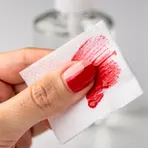
As a key ingredient in nail polish remover, dimethyl ketone evaporates quickly and leaves no residue.
-
Industrial manufacturers rely on dimethyl ketone for producing plastics and synthetic fibres.
-
Dimethyl ketone is often used in laboratories as an effective solvent for cleaning glassware.
-
The chemical formula for dimethyl ketone is C3H6O.
-
Many laboratories use dimethyl ketone as a solvent.
-
In many cosmetic products, such as nail polish remover, dimethyl ketone effectively evaporates, ensuring a clean finish without residue.
-
Chemical industries utilize dimethyl ketone extensively in the production of various plastics and synthetic materials.
Synonyms
 9
6.2
9
6.2

A clear liquid with a strong smell used to remove nail polish and dissolve materials

A clear liquid that burns easily and people use to dissolve things and make plastics
Surface Forms
Morphology
This is a straightforward chemical compound name: 'dimethyl' denotes two methyl groups and 'ketone' denotes a carbonyl-containing organic compound, so together they describe a ketone bearing two methyl groups (acetone). The meaning is directly compositional and follows standard chemical naming, so a learner who knows both constituent terms can derive the MWE's meaning, albeit it is specialised vocabulary.
Etymology
Dimethyl ketone is a name that tells you what the molecule looks like: di- means two, methyl are small carbon parts, and ketone is the main chemical group. So the name gives the image of two methyl parts on a ketone and is another name for the common solvent 'acetone'.