

digression
 6
7.0
6
7.0

- noun
- /daɪˈɡrɛʃən/
- So let's move on after that long digression, OK?
- a brief digression
- a long digression
- a narrative digression
Loading YouTube…
Watch on YouTubeI want just here to make a small digression.
- I want just here to make a small digression.
- So why do I mention this seemingly absurd or irrelevant digression?
- I mean, in most places those are all digressions, but OK.
- So enough of a little digression there coming back.
- So what I would say to come back to next questions, just a slight digression.
- This is slight digression, but Faulkner is really very emphatic about the two phases of Hightower.
- And I point out that we all read Elliot and we don't read # seems anyway, that's that's the digression.
Examples
-
I am sorry for the digression, but it is good to put a positive note on things.
Academic text (2001) -
All right now, Mr. Kowalski, let us proceed without any more digression.
-
So for those of you who care, I hope this little digression was interesting.
-
This is a bit of a digression from our stop loss, but it's one worth having.
-
But we probably need to do a brief digression in order to get there.
Blog text (4) -
Why doesn't anyone appreciate a good digression?
-
In a moment, I will end the digressions and return to the storyline.
Academic text (1991) -
Eating and his curiosity about her Caribbean background lengthened their digression from the topic that had brought them together.
Fiction book (1992) -
Before discussing the implications of Bernstein's findings, a brief methodological digression is in order.
Academic text (2001) -
During the lecture, the professor's digression about his travel experiences provided a humorous moment for the students.
Synonyms
 25
5.3
25
5.3
A difference from what is usual or expected
 17
6.1
17
6.1
A sudden change of topic that is only loosely related to the main subject
 13
5.2
13
5.2
A change that moves attention or action away from the main plan
 7
5.5
7
5.5
A short remark not part of the main conversation, often said to the audience
 4
6.0
4
6.0
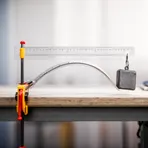
How much an object bends or moves away from a straight line
 1
5.3
1
5.3
A short remark added in speech or writing to give extra information


 1
9.9
1
9.9
A part in a book or speech that leaves the main topic to talk about a related subject

A short move away from the main topic in speech or writing
Antonyms


How Digressive

Surface Forms
Morphology
digression = digress (transparent) = gress + ion
The noun 'digression' is transparently formed from the verb 'digress' by adding the suffix '-ion'.
Etymology
Digression comes from dis- 'apart' and gress 'step', the same root as progress. A digression is like taking a 'step away' from the main topic in speech or writing, a short move before returning.