
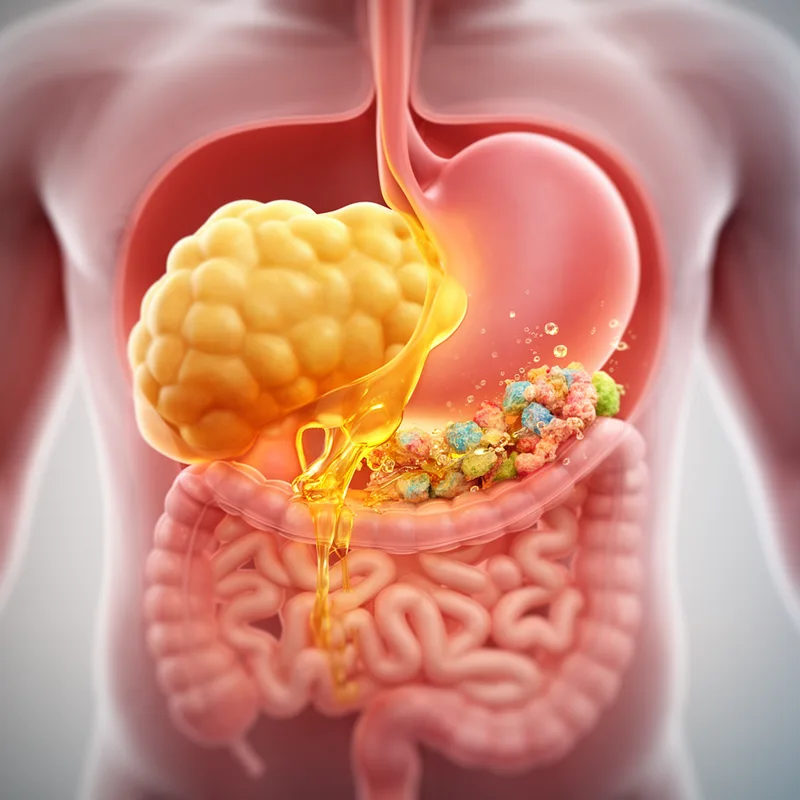
digestive gland
- noun
- /dɪˈdʒɛstɪv ɡlænd/
- Specialized
- The pancreas is an important digestive gland that releases enzymes into the small intestine for digestion.
Examples
-
The human liver is the largest digestive gland in the body.
-
Salivary glands are also considered major digestive glands because they secrete enzymes that begin the process of digestion.
-
Problems with a digestive gland can lead to various digestive disorders.
-
The digestive gland secretes enzymes that help break down food.
-
Many animals have a specialized digestive gland for processing their food.
-
Salivary glands are major digestive glands that secrete enzymes to aid in breaking down food in the mouth.
-
Many animals possess a specialized digestive gland that assists in efficiently processing their food.
Surface Forms
Morphology
The meaning 'a gland that produces and releases substances into the digestive tract' is compositionally derived from 'digestive' (relating to digestion) + 'gland' (an organ that releases fluids). This adjective + noun combination follows a straightforward, cross-linguistic compositional pattern, so a B1 learner who knows both constituents would readily infer the MWE's meaning.
Etymology
The compound digestive gland gives a simple picture: a gland is a small organ that makes and sends out juices, and digestive shows these juices help to 'digest' food. So it means a gland that produces and releases liquids to help digestion.

