
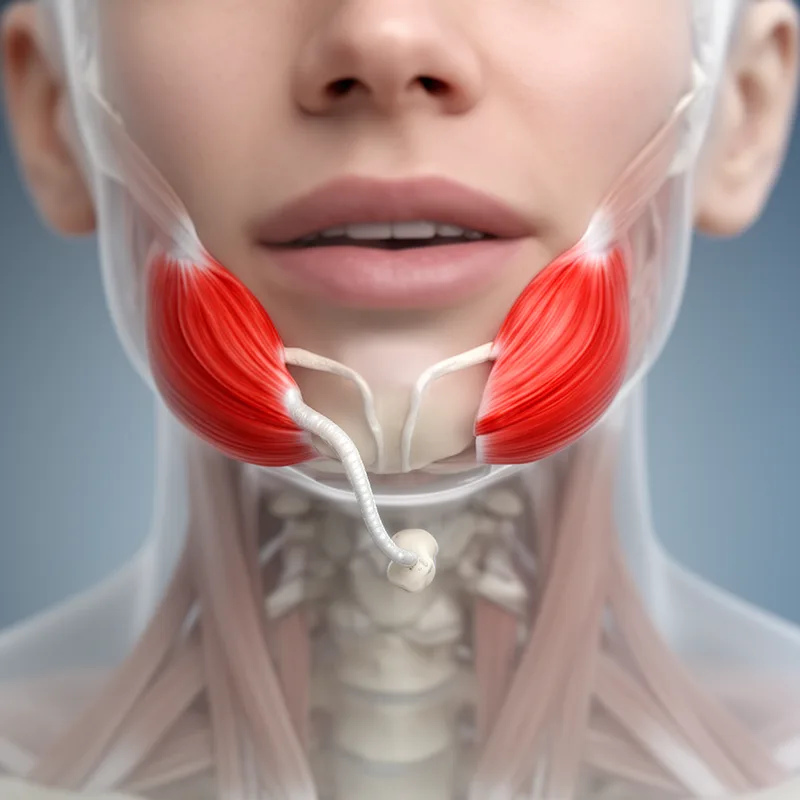
digastric
- adjective
- /ˌdaɪˈɡæstrɪk/
- Specialized
- The digastric muscle plays a crucial role in swallowing by allowing movement of the jaw.
- digastric muscle
- belly of the digastric
Examples
-
In the 22-mm embryo (middle of the seventh week), the posterior belly of the digastric muscle and the stapedius and stylohyoid muscles are developing (figure 9).
Academic text (2003) -
The submandibular capsule is sutured to the cervical fascia below the digastric muscle, and the cut ends of the platysma muscle are repaired.
Academic text (2004) -
From the digastric triangle in here.
-
The branch to the posterior belly of the digastric muscle.
Academic text (2003) -
The mylohyoid is sutured to the digastric fascia with absorbable sutures.
Academic text (2004) -
By the middle of the fifth week (embryo length: 10 mm), the facial nerve gives off small branches to the posterior digastric premuscle mass.
Academic text (2003) -
The facial ridge was lowered inferiorly at the level of the digastric ridge to allow for unencumbered communication between the mastoid bowl and the meatus (Figure 1).
Academic text (2002) -
During the procedure, the surgeon carefully examined the digastric region to ensure proper function.
-
He felt tension in his digastric area after performing exercises that targeted his neck muscles.
Surface Forms
Morphology
digastric = gastric (semi-transparent) = di + gastr + ic
The parts ('di-' = two, root 'gastr-' + suffix '-ic') are recognizable, but the specific anatomical meaning ('two-bellied muscle') is technical and not fully obvious to a general B1 learner.
Etymology
Digastric comes from Greek parts di- meaning 'two' and gaster meaning 'belly', the same root you see in gastric. So digastric describes something related to a muscle that has two 'bellies' connected by a tendon.

