
diffusive
 1
7.7
1
7.7

- adjective
- /dɪˈfjuːsɪv/
- Specialized
- For molecular motors, unlike bacteria, the diffusive motion overwhelms the directed motion of swimming.
- self-diffusive
- diffusive goodness
- diffusive transport
Examples
-
The perfume has a diffusive quality that fills the entire room with its scent.
-
The diffusive flux enables incorporating the level set formulation within an existing Galerkin finite element framework.
Academic text (2018) -
And for that, before I show you what diffusive motion is, I should start by telling you what uniform motion looks like.
-
Provided the flow rates are fast, the protein stream narrows to a length scale small enough to facilitate fast diffusive mixing.
Academic text (2011) -
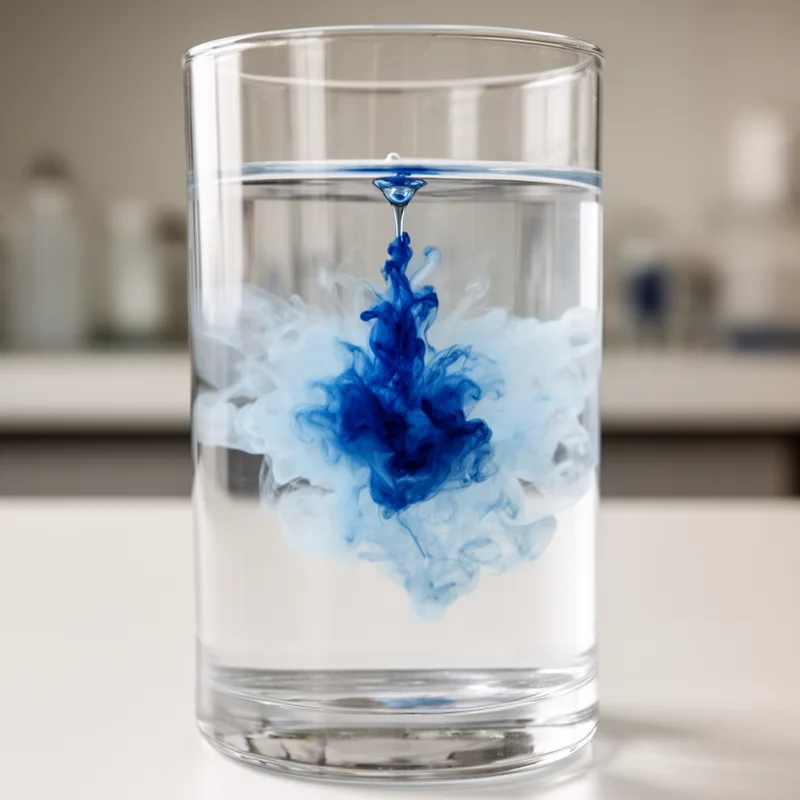
At a microscopic level, the diffusive process is a sequence of random movements of the diffuser relative to its surroundings.
Academic text (2001) -
Results of the experiment will be translated to the nanoscale for the development of a more comprehensive predictive model of the diffusive transport in nanoconfinement.
Academic text (2011) -
The diffusive form of the regularization term ensures curvature-based motion, resulting in smooth evolution of the level sets around the interface.
Academic text (2018) -
In a diffusive medium, particles spread out evenly over time.
-
The diffusive nature of the gas allows it to slowly permeate through the air.
Synonyms


 1
7.9
1
7.9
To cause tiny pieces, light or sound to spread out

Likely to spread widely, for example news or disease

Relating to the slow movement of tiny particles through a material from crowded to less crowded areas

About the way something spreads from one place to another

Spreads through a place or thing and fills every part

Spreading through a place or group and affecting everything there

Able to pass through a material, like a gas or liquid

Able to dissolve and mix easily in water

Spreading a soft color or feeling slowly over something

Able to make more of itself or spread to new places
How Diffusive

Surface Forms
Morphology
Etymology
Diffusive comes from Latin parts dis- 'apart' and fundere 'to pour', so it once meant 'to pour out in different directions'. Think of it like water spilled from a cup that spreads everywhere; that is why diffusive describes something that spreads by diffusion.