
diffusionism


 1
9.9
- noun
- /dɪˈfjuːʒənɪzəm/
- Archaic
- Many anthropologists support diffusionism, believing it plays a significant role in the evolution of cultural practices.
Examples
-
Read Vere Gordon Childe on diffusionism.
-
Still, Meggers continues to search for more evidence and makes no apologies, suggesting that the sensitivity to diffusionism is unfounded.
Academic text (2003) -
Keywords: diffusionism; genealogy; grid; orthogonal planning; Dan Stanislawski; urban form
Academic text (2008) -
Stanislawski's writings on the grid plan serve as a useful exemplar of the pitfalls associated with doctrinaire diffusionism.
Academic text (2008) -
In this article, I critically examine the limitations of Stanislavski's theory of the grid's origin as a means of challenging the doctrine of diffusionism more generally.
Academic text (2008) -
It is important to bear in mind that Stanislavski was writing at a time when many geographers and other scholars were embracing the doctrine of diffusionism.
Academic text (2008) -
Yet Stanislawski was certainly not the only scholar to "succumb to diffusionism" (1987, 30); nor should we dismiss his contribution to geography on this basis alone.
Academic text (2008) -
Further, such ideas still carry the negative connotation of diffusionism, implying that natives of the Americas weren't capable of developing advanced technology on their own, a position many archaeologists are loathe to endorse.
Academic text (2003) -
Such a critique also opposes the doctrinaire application of diffusionism, especially in cases where the evidence does not warrant such an explanation, a phenomenon Blaut (1987, 37) referred to as "phantom diffusion."
Academic text (2008) -
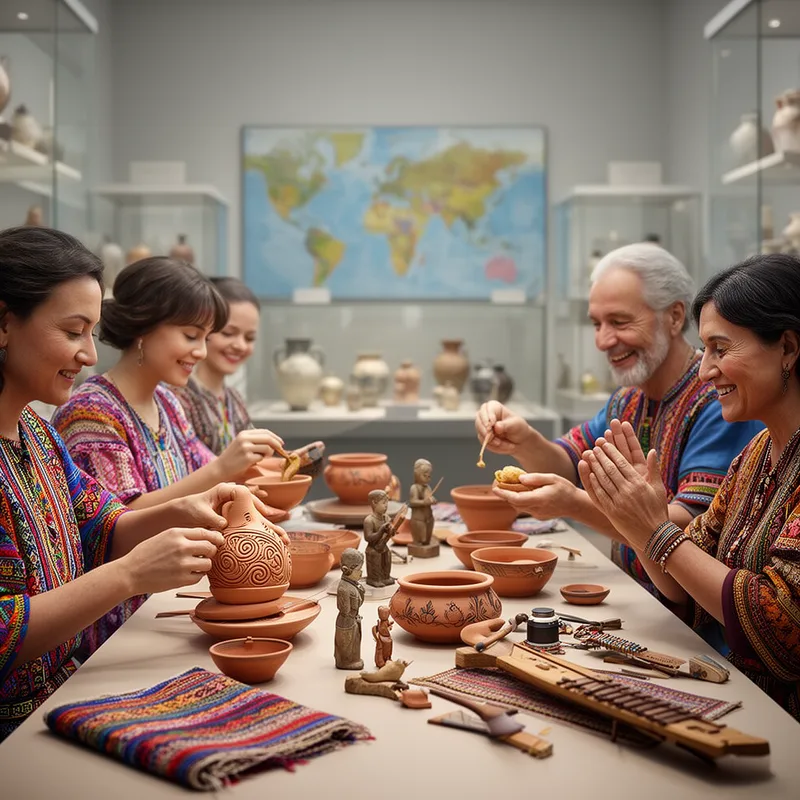
The theory of diffusionism explains how cultural traits spread from one society to another through interaction.
Surface Forms
Morphology
Etymology
Diffusionism comes from diffuse and the Latin root diffundere, which mean 'to pour out' or 'spread', plus -ism meaning 'a belief or theory'. So, imagine ideas or tools being 'poured out' and carried from one group of people to another — that image explains why diffusionism is the idea that cultural traits spread between societies.