
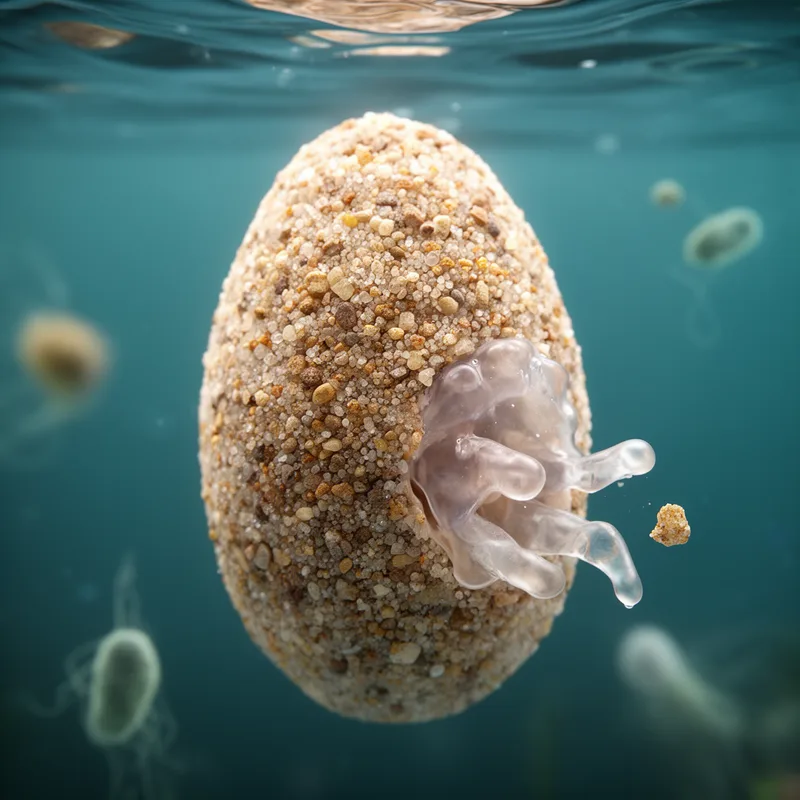
difflugia
- noun
- /dɪˈfluːdʒiə/
- Specialized
- Under the microscope, the difflugia was visible, carrying its shell of sand grains.
Examples
-
Researchers often study difflugia to understand how protozoans construct their protective casings.
-
Under the microscope, the difflugia was clearly visible, displaying its unique shell made of cemented sand grains.
-
The presence of difflugia in water samples can indicate specific environmental conditions.
-
The difflugia is often found in freshwater environments.
-
Did you see the difflugia under the microscope?
-
Researchers often study difflugia to understand how these protozoans construct their protective shells from sand grains.
-
The presence of difflugia in water samples can reveal important information about the environmental conditions of the area.
Surface Forms
Etymology
The word difflugia probably comes from the root diff- meaning 'apart' or 'spread', like in the English word diffuse. These tiny protozoans build a shell by gathering many scattered sand grains, so thinking of 'scattered' grains helps you remember the name.

