
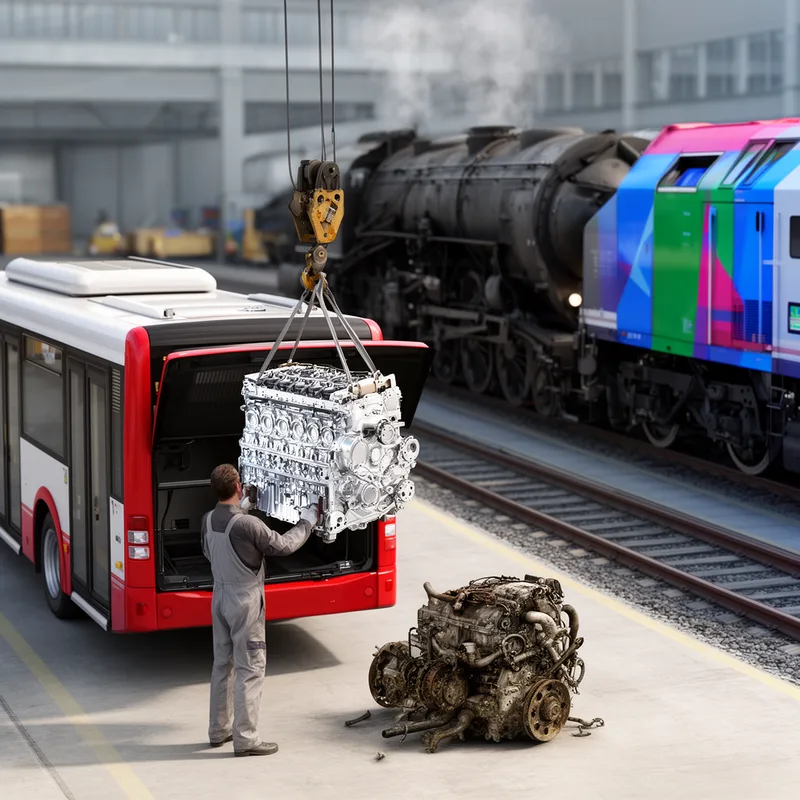
dieselization


 1
6.1
Replacing steam and other engines with diesel engines in trains and buses
- noun
- /ˌdiːzəlɪˈzeɪʃən/
- Specialized
:
diéselización
- Dieselization of equipment in underground mines occurred mostly in the 1960s-1970s (Stewart et al. 2010). Diesel engines are also used in automobiles, especially in Europe.
Examples
-
The dieselization of trains has improved efficiency and reduced emissions in many rail systems.
-
After the dieselization of the bus fleet, public transportation became faster and more reliable.
-
The project's dieselization phase significantly enhanced the operating capabilities of the local freight services.
Surface Forms
dieselization singular
dieselizations plural
Morphology
Etymology
The word dieselization comes from the name Diesel, after Rudolf Diesel, the man who created the diesel engine. The ending -ization means 'the process of', so dieselization is the process of replacing older engines with diesel engines.