
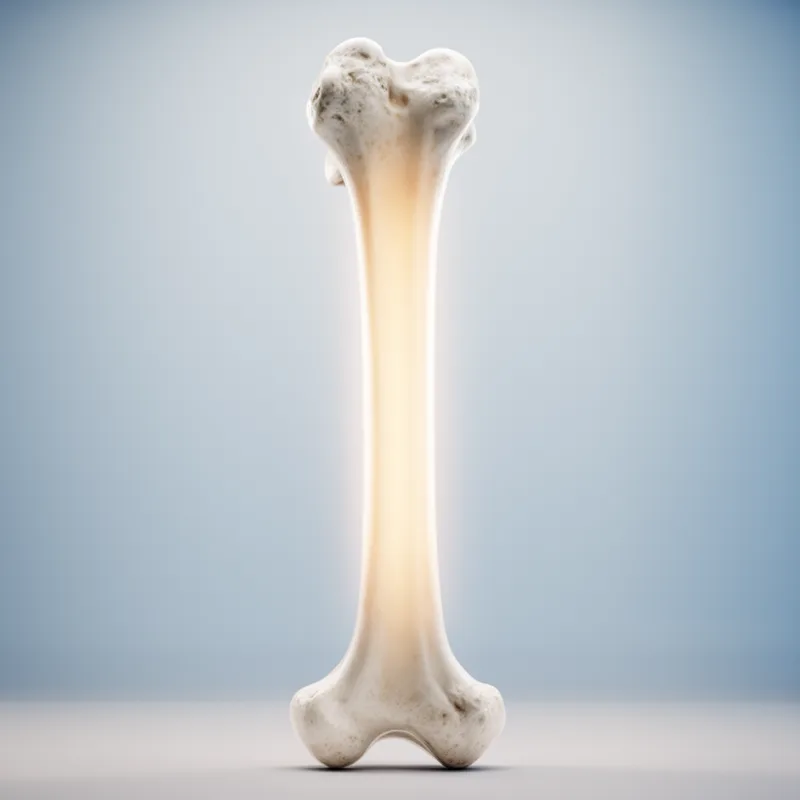
diaphysis
- noun
- /daɪˈæfɪsɪs/
- Specialized
- Humeral shaft (diaphysis) and scapula fractures are uncommon injuries in children and, in the absence of significant trauma (motor vehicle accident, fall from height), should raise suspicion for possible nonaccidental trauma (child abuse).
- tibial diaphysis
Examples
-
A metaphyseal fracture occurs between the epiphysis and the diaphysis of a long bone.
Academic text (2002) -
The metaphyseal region is at the end of long bones (the contoured flare at the end), and the diaphysis is the central shaft of the bone.
Academic text (2006) -
Angular deformity in the midportion or diaphysis of long bones is usually not acceptable and will not remodel very well.
Academic text (2006) -
The major anatomic regions of a growing bone include the epiphysis, physis (growth plate), metaphysis, and diaphysis (Figure 2).
Academic text (2006) -
The proximal regions of the tibial diaphysis of the SCI specimens were not any less affected than distal regions in material properties, as indicated by the flexural modulus of elasticity.
Academic text (1997) -
The diaphysis of a long bone is the main shaft that connects the two ends, known as the epiphyses.
-
In children, proper growth of the diaphysis is essential for the overall length and shape of long bones.
-
Surgeons often focus on the diaphysis when repairing fractures in long bones.
Synonyms

 55
4.2
55
4.2

A long straight middle part of things like an arrow or tool handle
Surface Forms
Morphology
Etymology
Diaphysis comes from the Greek parts dia- 'through' and physis 'growth'. So, diaphysis refers to the long central 'shaft' of a bone, the part that runs 'through' the bone between its ends.