
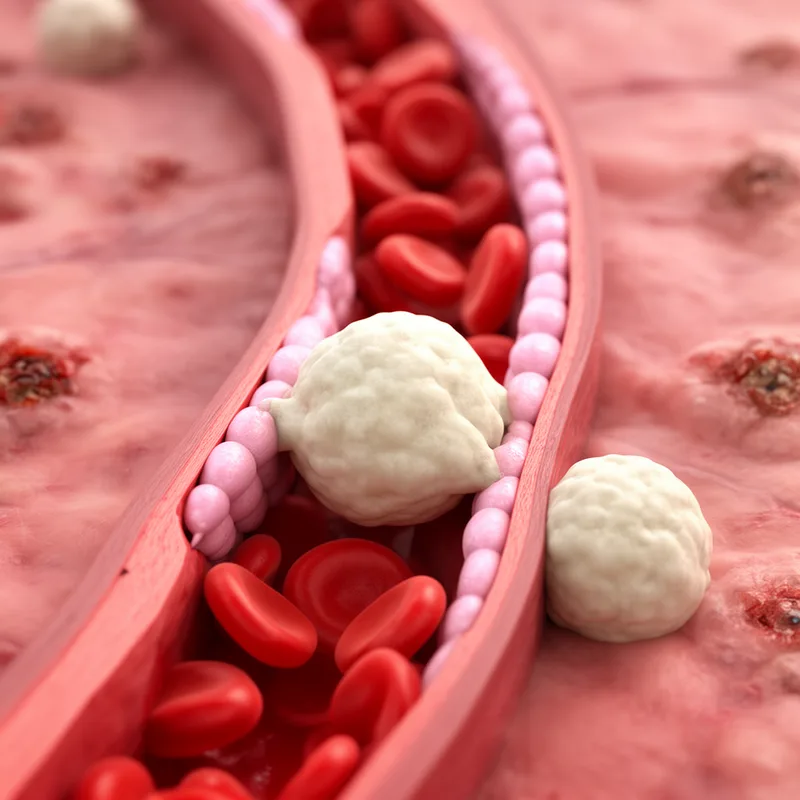
diapedesis


 1
9.9
- noun
- /ˌdaɪəˈpɛdəsɪs/
- Specialized
- During an infection, diapedesis allows white blood cells to reach the site of inflammation.
Examples
-
The process of diapedesis is crucial for the immune response to infection.
-
The phenomenon of diapedesis enables white blood cells to move through the capillary walls during an immune response.
-
During inflammation, diapedesis allows white blood cells to reach areas of tissue injury.
-
Researchers studied how diapedesis is regulated at the cellular level in healthy and diseased tissues.
-
The process of diapedesis is crucial for the immune response.
-
During inflammation, diapedesis allows white blood cells to migrate from the bloodstream into surrounding tissue.
-
Researchers explored how diapedesis facilitates the movement of blood cells into areas affected by injury.
Surface Forms
Morphology
diapedesis = dia + ped + esis
Although 'dia-' means 'through' and '-esis' is a process noun, the central combining form ('ped') is not a recognizable English base here and the term is a technical Greek-derived medical noun, so learners cannot reliably derive the meaning.
Etymology
Diapedesis comes from Greek parts: dia- meaning 'through' and a second part meaning 'to pass'. So it literally means cells 'passing through' the wall of a small blood vessel into nearby tissue, which is exactly what the term describes.