
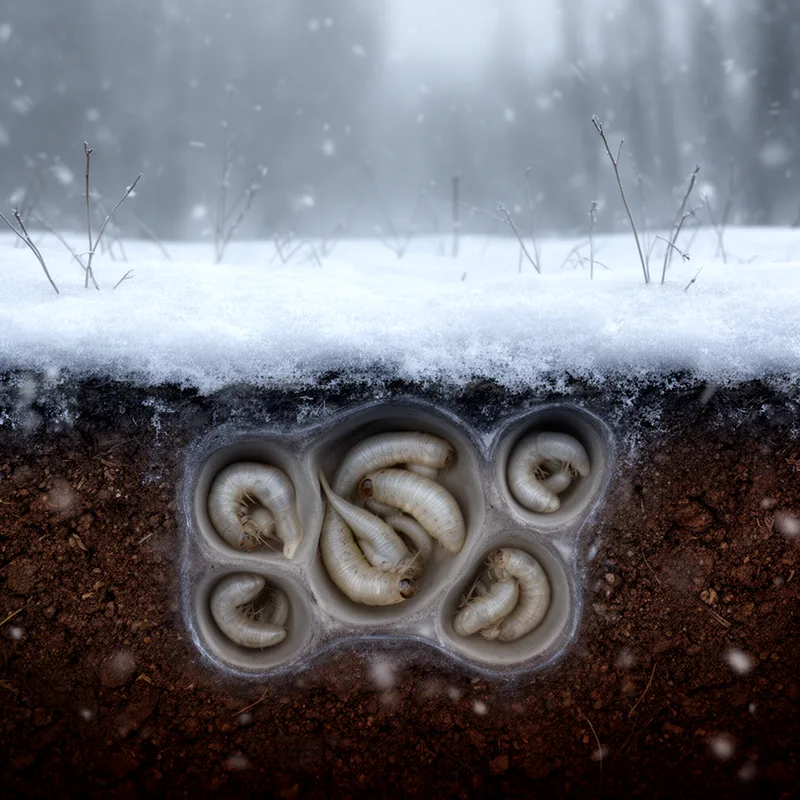
to diapause


 1
9.9
- verb
- /ˈdaɪəˌpɔs/
- Specialized
- When the temperature drops, the larvae of certain beetles diapause until conditions become favorable for growth.
Examples
-
In addition, all females carry a diapausing blastocyst conceived a year before the birth of the new young, so it is extremely difficult to determine paternity in the wild population.
Blog text (26) -
The surprise came from the Houston mosquitoes: the females exposed to the artificially shortened days also laid diapausing eggs.
Academic text (1992) -
It successfully used, for the first time, a system of targeting insecticide applications to diapausing boll weevils and monitoring pheromone traps.
Academic text (2003) -
Populations from Tokyo, at 35 degrees north latitude, go into diapause at 14 hours of daylight; those from Okinawa, at 26 degrees north latitude, diapause at 12.5 hours.
Academic text (1992) -
If insects respond to increasing day length for triggering the termination of diapause, northern insects diapausing in a more southerly latitude (where winter days are longer) would be prone to break diapause early because of their habituation to short winter days.
Academic text (1996) -
During extreme cold, some species of insects diapause to survive until warmer weather returns.
-
Many butterflies diapause in the winter, waiting for spring before they emerge from their state of suspended development.
Surface Forms
Etymology
Diapause comes from the same parts, dia-, meaning 'across' or 'through', and pause, meaning 'stop'. So to diapause is to 'pause' development — to stop growing for a time so an animal can survive harsh weather or lack of food.