
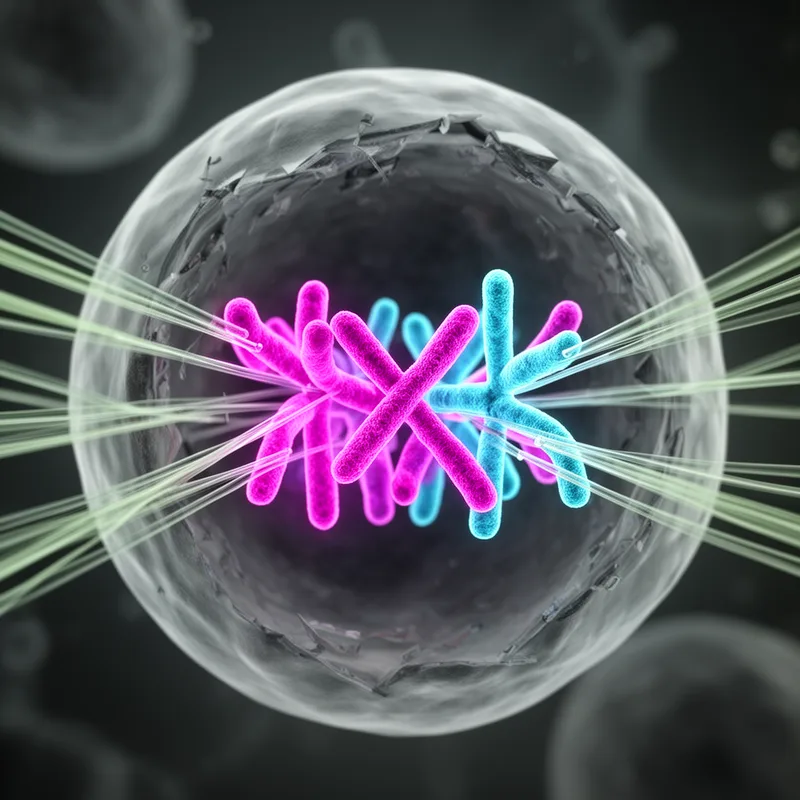
diakinesis
- noun
- /ˌdaɪəˈkɪnɪsɪs/
- Specialized
- During diakinesis, the chromosomes are fully condensed and the nucleolus disappears.
Examples
-
The pairing of homologous chromosomes is complete by the time diakinesis occurs.
-
During diakinesis, the chromosomes become highly condensed.
-
Researchers observed abnormalities in diakinesis in certain mutant strains.
-
What is diakinesis?
-
During diakinesis, the chromosomes condense further in preparation for metaphase.
-
As diakinesis begins, the nuclear envelope breaks down and the chromosomes become distinct.
-
By the end of diakinesis, the chromosomes are tightly packed, ready for cell division.
Surface Forms
Morphology
Etymology
Diakinesis comes from the Greek parts dia- meaning 'through' and kinesis meaning 'movement', the same movement idea you see in kinetic. So, diakinesis is easy to remember because it is the final stage of cell division when chromosomes make their last movements and get ready to split.

