
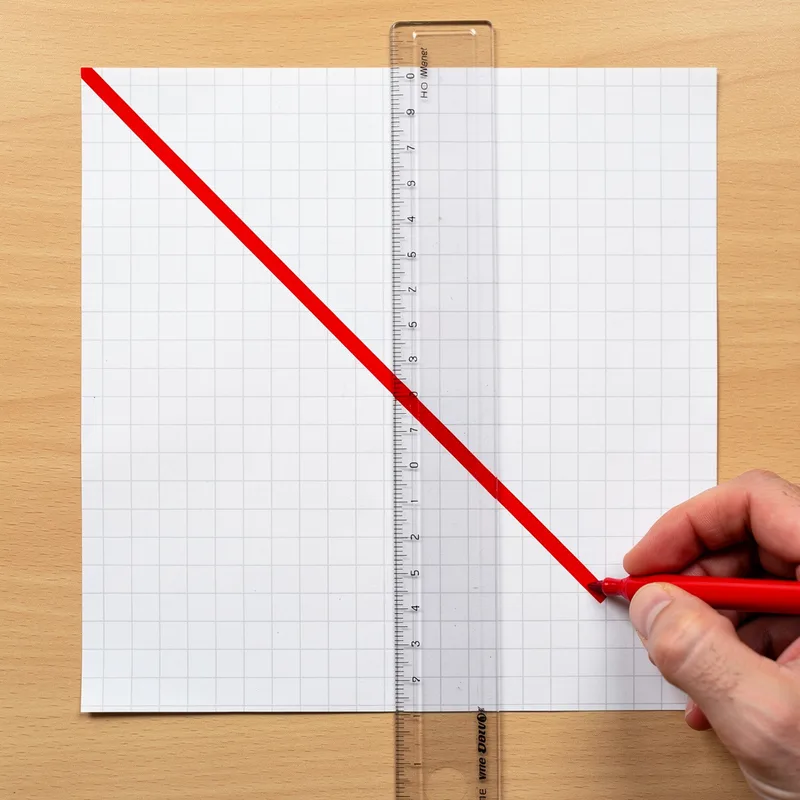
diagonal
 9
3.7
9
3.7

- noun
- /daɪˈæɡənl/
- The tables spiral out from the tree: two white tablecloths draped at diagonals to each other.
- diagonal crack
- main diagonal
- two diagonals
Loading YouTube…
Watch on YouTubeCute little short sleeves and a little ruffle across the top horizontal, no diagonal.
- Cute little short sleeves and a little ruffle across the top horizontal, no diagonal.
- Then what you do is you take the diagonal.
- Now what we're going to do is we're going to multiply on the diagonals, add on the vertical.
Examples
-
The city's main train track runs in a northwest to southeast diagonal across the mainland.
Academic text (2008) -
The tabletop bends on a diagonal so all legs contact the floor.
Academic text (2009) -
So you develop diagonal lines through the system, and I can draw in other diagonal lines which would be found.
-
So the people on the diagonal stayed in the same place.
-
We take the perpendicular to the diagonal and we get BE.
-
She's been searching for a mostly red piece with a thin diagonal of yellow across its foot.
Fiction book (1996) -
And you're just going to draw a diagonal line across the cookie and then make a little rectangle.
-
Wineshop and mill form a strong corner-to-corner diagonal from lower right to upper left.
Academic text (2002) -
OK, Remember guys, on a rhombus and a square, the diagonals are perpendicular, right?
-
The city's main train track runs in a northwest to southeast diagonal across the mainland.
Synonyms
 6
7.0
6
7.0
A diagonal cut across fabric that helps it hang smoothly
Compounds
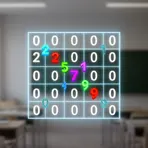
- Specialized
A square table of numbers that has numbers only from the top left to the bottom right and zeros elsewhere

- Specialized
The line of numbers in a square table from the top left to the bottom right

- Specialized
A line of numbers in a square table that runs from the top left to the bottom right

- Specialized
A line of numbers in a square grid that runs from the bottom left to the top right
How Angled


Surface Forms
Etymology
The word diagonal comes from Greek parts dia- 'through' and gonia 'angle', so it literally meant a line 'across an angle' that joins two opposite corners of a shape. That's why a diagonal in a square or on a game board goes from one corner to the other.