
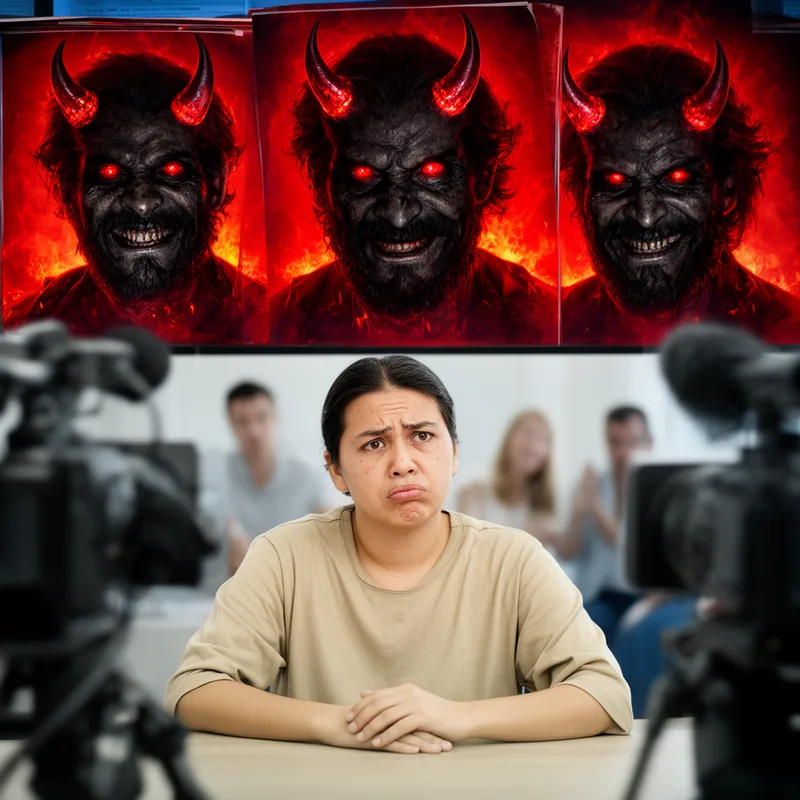
to devilize
- verb
- /ˈdɛvɪˌlaɪz/
- Some historians argue that media coverage tends to devilize political opponents.
Examples
-
Don't devilize him just because he made a mistake!
-
The novel depicts a society that attempts to devilize those who question authority.
-
His actions were misrepresented in ways that seemed to devilize his entire character.
-
They devilized the character to make the story more interesting.
-
The media often seeks to devilize public figures who challenge societal norms.
-
In her speech, she warned against efforts to devilize those who hold different beliefs.
-
Some political campaigns try to devilize their opponents by exaggerating their faults.
Synonyms

 77
7.1
77
7.1

Make a person, group, or thing seem evil and dangerous, often unfairly
 2
6.9
2
6.9
Show someone as evil or the cause of problems

To make a person or group seem very evil
How Evil

Surface Forms
Morphology
Etymology
Devilize comes from the word devil ('evil spirit' or 'very bad person') plus the ending -ize ('to make'). So, to devilize someone is to make them seem like a devil or to show them as evil.