
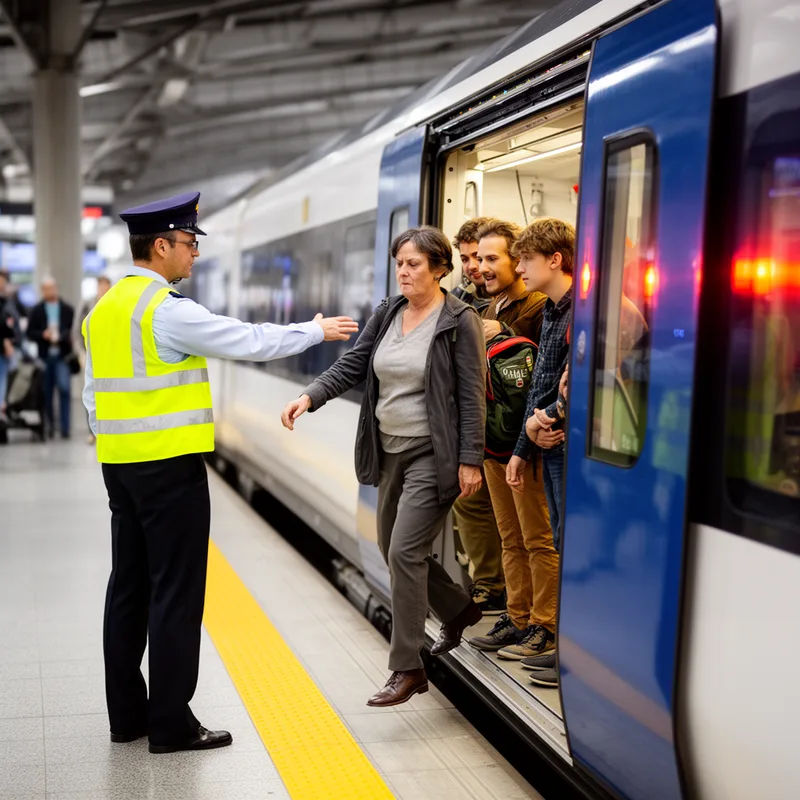
detraining
- noun
- /ˌdiːˈtreɪnɪŋ/
- After the train stopped at the station, passengers began detraining in an orderly manner.
Examples
-
In case of an emergency, detraining procedures must be followed to ensure everyone's safety.
-
The conductor announced that detraining would take place on the left side of the train.
-
The detraining process was smooth at the station.
-
Passengers experienced a brief detraining delay.
-
After the train stopped at the station, passengers began detraining in an orderly manner.
-
In case of an emergency, detraining procedures must be followed to ensure everyone's safety.
-
The conductor announced that detraining would take place on the left side of the train.
Synonyms

 10
5.2
10
5.2

An act of getting off a horse, bicycle, or vehicle
 1
8.1
1
8.1
An act when passengers and crew leave a ship or plane


 1
7.4
1
7.4
A time when passengers and crew get off a ship, plane, or vehicle
Antonyms

Surface Forms
Morphology
Etymology
Detraining comes from the prefix de- meaning 'off' and train meaning the railway vehicle, so it literally means 'getting off the train' and you can remember it like deplane for planes.