
detorsion
- noun
- /dɪˈtɔrʃən/
- Specialized
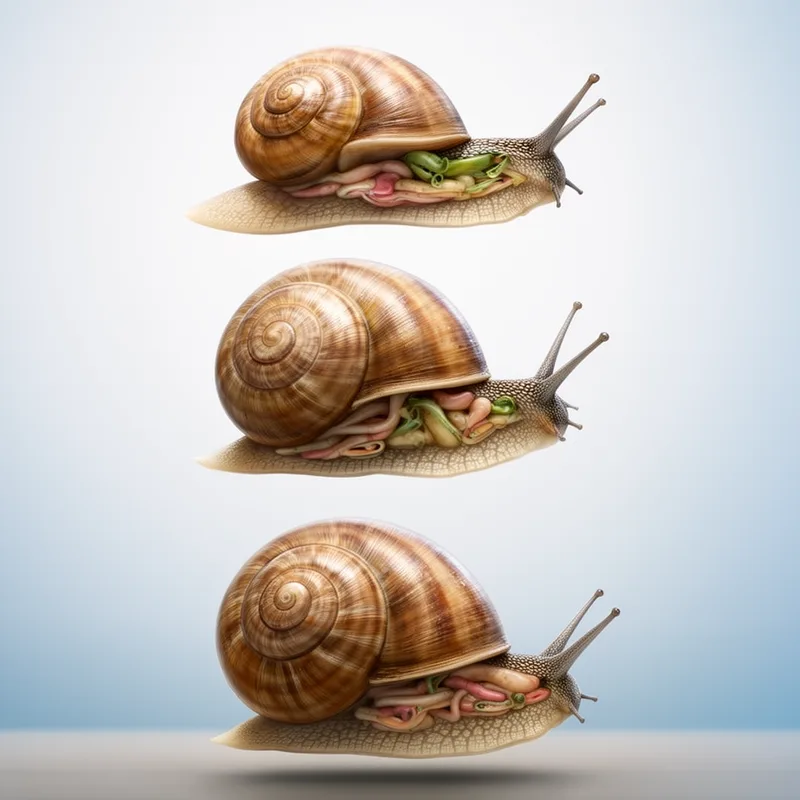
- During embryonic development, some gastropods undergo detorsion to achieve a less twisted body plan.
Examples
-
The process of detorsion can help explain the evolutionary changes in gastropod anatomy.
-
Scientists observed detorsion in certain snail species as they developed a more balanced body structure.
-
The detorsion of the shell is vital for the gastropod's development.
-
During detorsion, the body gradually returns to a symmetrical shape.
-
Scientists observed detorsion in certain snail species as they developed a more balanced body structure.
-
During embryonic development, some gastropods undergo detorsion to achieve a less twisted body plan.
-
During detorsion, the body gradually returns to a symmetrical shape.
Surface Forms
Morphology
Etymology
Detorsion comes from the Latin parts de- meaning 'undo' and torsion meaning 'a twist', from the same root as torque. So in snails, detorsion is the body 'untwisting' back toward a more even, balanced shape.

