
descort
9.9
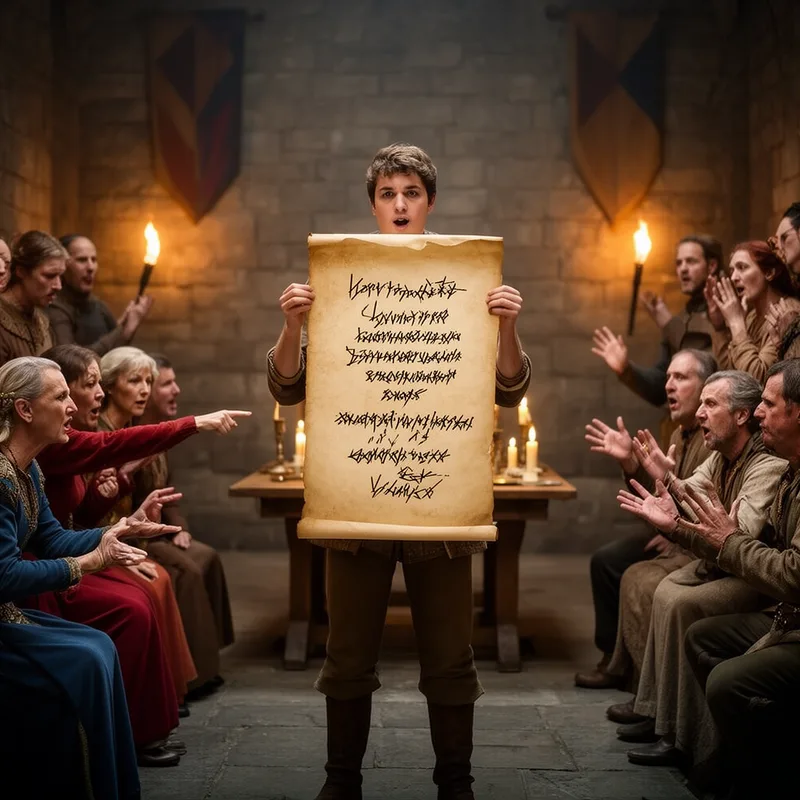
A medieval poem with an uneven form that shows conflict
- noun
- /dɪsˈkɔrt/
- Archaic
:
descort
- Petrarch has taken from the Provençals the descort, which has as its content the separation from love and from the woman, and the enigmatic devinalh form.
Examples
-
In the anthology of medieval poetry, this descort stands out for its unique expression of tension between joy and sorrow.
-
The poet's latest work is a beautifully crafted descort that explores the themes of love and loss through conflicting imagery.
-
Many scholars believe that the descort embodies the complexities of human relationships by juxtaposing harmonious and discordant elements.
Antonyms



Surface Forms
Etymology
Descort comes from old parts dis- meaning 'not' and cord meaning 'heart' or 'agreement', which you can see in the modern word discord. Medieval singers used a descort as a song or poem that sounds broken or mixed, so the origin helps explain its irregular, conflict-filled style.